A graduate letter of intent is an important part of the graduate school application process. It gives applicants an opportunity to explain why they want to pursue an advanced degree, what qualifications they bring, and how a particular program supports their academic and professional goals. More importantly, it helps the admissions committee understand the person behind the transcripts, test scores, and resume.
Whether you are applying for a master’s degree, doctoral program, or another graduate-level qualification, a well-written letter can strengthen your application. It should communicate your motivation, relevant experience, research interests, and future plans in a clear and convincing way.
This guide explains how to write a graduate letter of intent, what to include, how to organize each section, and what mistakes to avoid. You will also find a graduate letter of intent sample to help you prepare your own application.
What Is a Graduate Letter of Intent?
A graduate letter of intent is a formal document submitted as part of an application to a graduate school or university. It explains your intention to pursue a specific academic program and demonstrates why you are a suitable candidate.
The letter typically describes your educational background, academic interests, relevant professional experience, and long-term career objectives. It also explains why you have chosen a particular university and how its program aligns with your goals.
Some universities use different names for this document, including:
- Statement of purpose
- Graduate school personal statement
- Letter of intent for graduate school
- Statement of academic purpose
- Graduate admissions essay
Although these documents serve similar purposes, their requirements can differ between institutions. Always review the application instructions before preparing your letter.
What Should a Graduate Letter of Intent Include?
A strong graduate letter of intent should present a clear explanation of your academic motivation, qualifications, and future direction. Rather than simply repeating information from your resume, use the letter to connect your experiences with your reasons for pursuing graduate education.
1. A Professional Introduction
Begin by identifying the graduate program you are applying to and explaining your interest in pursuing the degree. Your opening paragraph should establish your academic direction and give the admissions committee a reason to continue reading.
For example, you might explain how an undergraduate course, research project, internship, or professional experience inspired you to pursue advanced study in your chosen field.
2. Academic Background and Qualifications
Describe your educational background and the experiences that have prepared you for graduate-level study. Highlight qualifications that are relevant to your intended program rather than listing every academic achievement.
Consider including:
- Your undergraduate degree and field of study.
- Relevant coursework or academic projects.
- Research experience and presentations.
- Academic awards, honors, or scholarships.
- Technical skills or specialized knowledge.
Explain how these experiences have developed the skills and knowledge you will need to succeed in graduate school.
3. Research Interests or Areas of Specialization
If you are applying to a research-oriented master’s or doctoral program, explain the topics you would like to explore. You do not necessarily need a fully developed research proposal, but you should demonstrate that you understand your academic interests.
For example, an applicant pursuing a degree in biomedical sciences might discuss an interest in molecular biology, disease mechanisms, or innovative treatment development.
Whenever possible, connect your interests to the university’s research facilities, faculty expertise, or available academic resources.
4. Why You Chose the Graduate Program
Admissions committees want to know why their institution is the right choice for you. Avoid using generic statements that could apply to any university.
Instead, identify specific program features that match your academic objectives, such as:
- Specialized courses or academic concentrations.
- Faculty members whose research interests align with yours.
- Research laboratories and academic facilities.
- Internship opportunities or industry partnerships.
- Interdisciplinary learning and collaborative projects.
Showing that you have researched the institution demonstrates genuine interest and helps make your application more convincing.
5. Career Goals and Future Plans
Explain how completing the graduate degree will contribute to your future. Your career goals should connect naturally with the knowledge, research experience, and professional development opportunities offered by the program.
You may describe your short-term objectives, such as developing specialized expertise or completing a research project, followed by longer-term ambitions in academia, industry, healthcare, public service, or another professional field.
6. A Strong Closing Paragraph
End your graduate letter of intent by briefly reinforcing your interest in the program and your readiness to undertake graduate-level study.
Thank the admissions committee for considering your application. Maintain a professional and confident tone without making exaggerated claims about your abilities.
Graduate Letter of Intent Sample
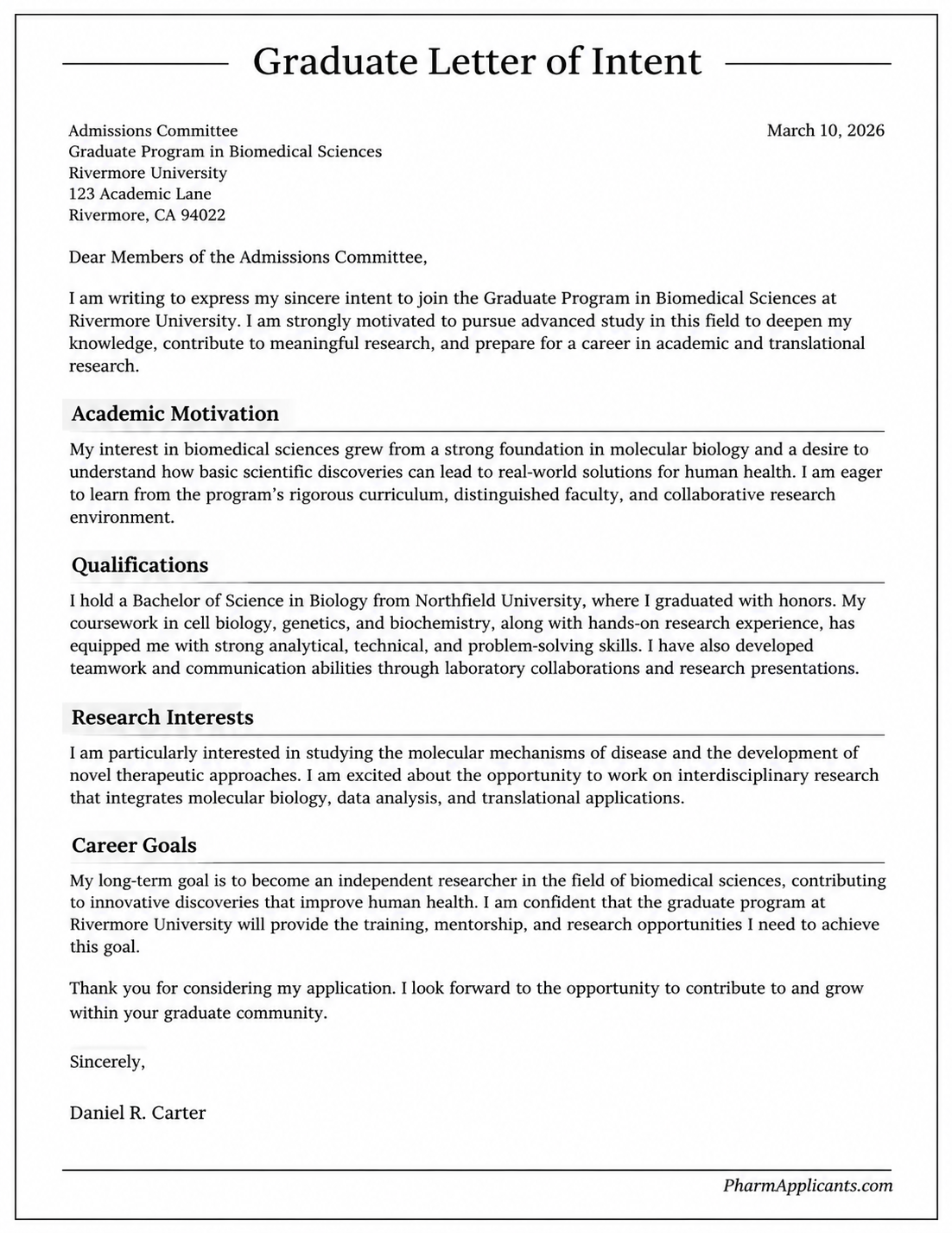
The following graduate letter of intent example illustrates how applicants can organize their academic background, motivation, qualifications, and career objectives into a professional application letter.
This sample is written for an imaginary applicant seeking admission to a graduate program in biomedical sciences. Replace the example details with your own experiences and the specific requirements of your target university.
Sample 1: Traditional Graduate Application Letter
Use this example as a reference for a formal letter addressed directly to a graduate admissions committee.
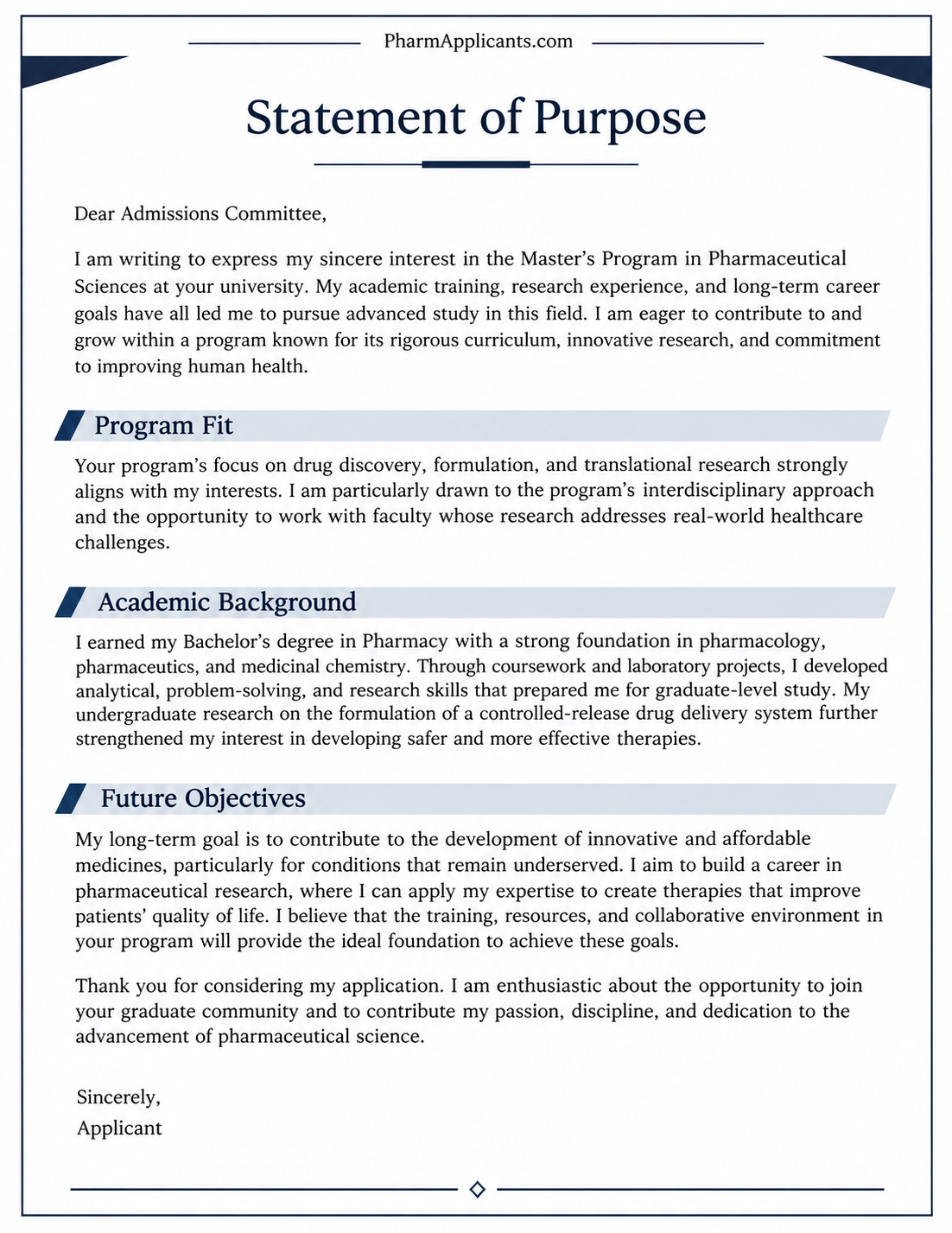
Sample 2: Statement of Purpose Format
A statement of purpose format can be useful when the university expects applicants to explain their academic interests and future objectives through clearly organized sections.
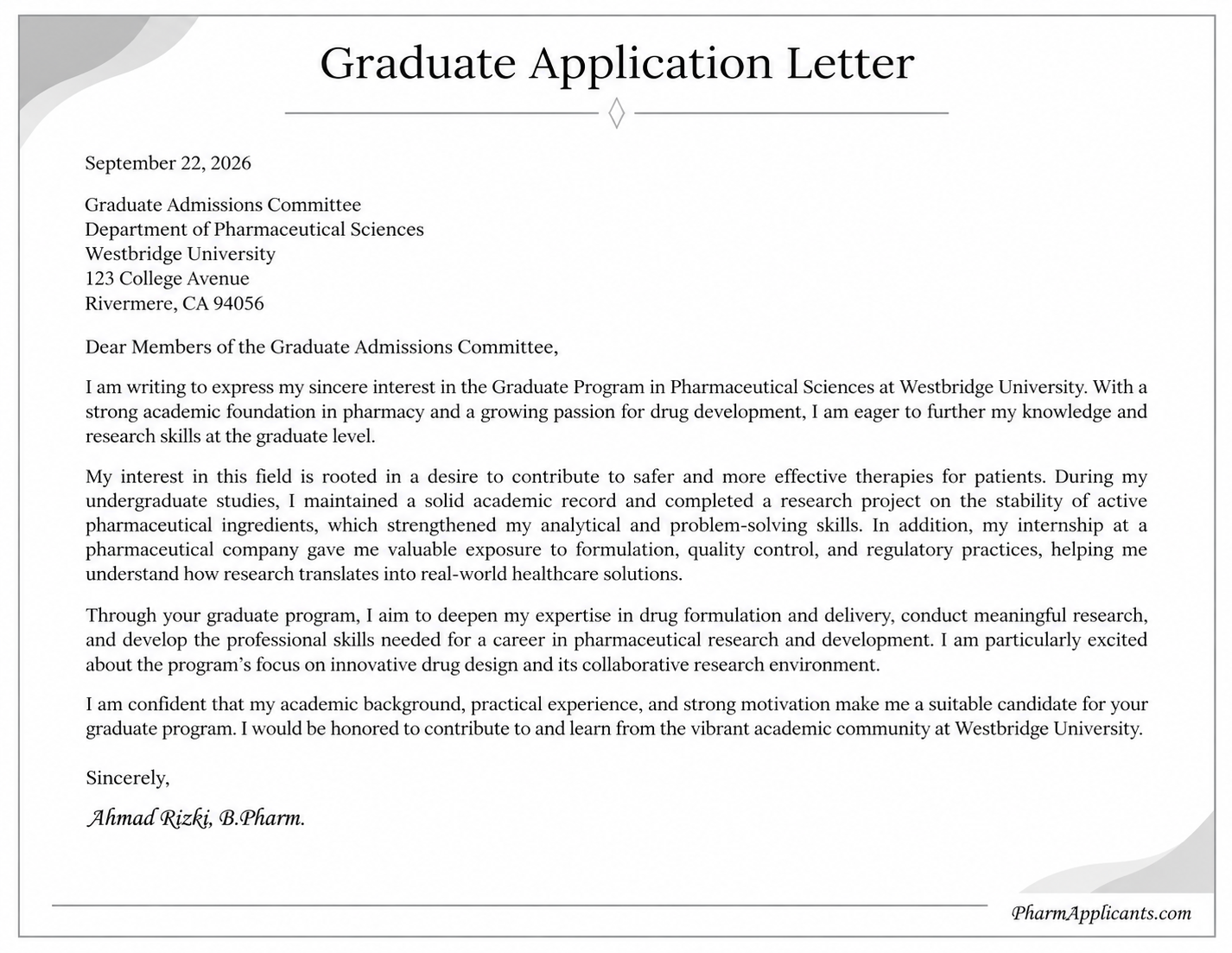
Sample 3: Research-Focused Graduate Letter
Applicants pursuing research-intensive graduate degrees may benefit from emphasizing their academic motivation, research interests, qualifications, and intended career direction.
How to Write a Graduate Letter of Intent Step by Step
Writing an effective graduate school letter does not have to be complicated. Following a structured process can help you develop a focused and persuasive document.
Step 1: Research the University and Program
Start by reviewing the university’s website, graduate admission requirements, curriculum, and faculty research interests. Identify the program features that genuinely match your academic and professional goals.
Step 2: Identify Your Main Message
Before writing, determine what you want the admissions committee to understand about you. Your main message should connect three elements: your academic preparation, your reason for pursuing graduate education, and your future ambitions.
Step 3: Create an Outline
Organize your ideas into a logical structure before writing full paragraphs. A simple outline might include:
- Introduction and intended graduate program.
- Academic background and relevant experience.
- Research interests or specialization.
- Reasons for choosing the university.
- Short-term and long-term career goals.
- Professional closing statement.
Step 4: Write Clearly and Specifically
Use direct language and provide meaningful examples. Instead of saying that you are passionate about research, explain what research experience developed that interest and what questions you hope to explore in graduate school.
Specific details make your letter more credible and memorable.
Step 5: Edit and Proofread Your Letter
Review your document for grammar, spelling, clarity, and consistency. Remove unnecessary information and make sure every paragraph contributes to your overall application.
Ask a professor, academic advisor, or trusted mentor to review your letter before submission. An additional perspective can help identify unclear explanations or missing details.
Tips for Writing a Strong Graduate Letter of Intent
A well-organized letter is important, but the quality of its content matters just as much. Keep these practical recommendations in mind:
- Customize every application: Adapt your letter to the specific university, department, and degree program.
- Show genuine motivation: Explain what led you to pursue advanced education and why the subject matters to you.
- Highlight relevant achievements: Focus on academic projects, professional experience, and skills that support your application.
- Demonstrate program knowledge: Mention relevant courses, research opportunities, or faculty interests when appropriate.
- Maintain a professional tone: Write confidently while remaining respectful and authentic.
- Follow the application guidelines: Respect the institution’s instructions regarding word count, formatting, and submission requirements.
- Avoid unnecessary repetition: Use each paragraph to communicate a different aspect of your qualifications and goals.
Common Mistakes to Avoid
Even qualified applicants can weaken their graduate applications through avoidable writing mistakes. Pay attention to the following issues when preparing your letter.
Using a Generic Letter for Every University
Sending exactly the same letter to multiple universities can make your application appear impersonal. Tailor each document to the institution and explain why its particular program is relevant to your goals.
Repeating Your Resume
Your graduate letter of intent should provide context rather than simply reproduce your resume. Explain what you learned from important experiences and how they influenced your academic direction.
Making Unrealistic Claims
Avoid exaggerated statements about your achievements, abilities, or future impact. Admissions committees value applicants who communicate their strengths honestly and demonstrate a realistic understanding of their goals.
Ignoring Submission Requirements
Some universities request a statement of purpose rather than a traditional letter. Others specify a word limit, formatting style, or particular questions that applicants must answer. Always follow the exact instructions provided by the graduate admissions office.
Graduate Letter of Intent Formatting Guidelines
Unless the university provides a specific format, keep your graduate letter of intent clean, readable, and professional.
- Font: Use a professional font such as Arial, Calibri, or Times New Roman.
- Font size: Choose 10.5 to 12 points for comfortable reading.
- Spacing: Use consistent paragraph spacing and readable line spacing.
- Margins: Use standard one-inch margins unless otherwise instructed.
- Length: Follow the university’s requested word count. If no limit is provided, check the department’s recommendations rather than assuming a universal standard.
- File format: Submit a PDF or another requested format to preserve document formatting.
- File name: Use a clear name, such as Firstname-Lastname-Graduate-Letter.pdf.
Frequently Asked Questions
Is a graduate letter of intent the same as a statement of purpose?
They are closely related and sometimes used interchangeably. Both explain an applicant’s academic background, motivation, interests, and future goals. However, some universities distinguish between the two documents and provide different instructions. Always follow the terminology and requirements used by your target institution.
How long should a graduate letter of intent be?
The appropriate length depends on the university and degree program. Some institutions request a short letter, while others require a more detailed statement of purpose. Follow the stated word limit whenever one is provided.
Should I include work experience in my graduate letter of intent?
Yes, if your professional experience is relevant to your intended field of study. Explain how your responsibilities, projects, or practical skills have prepared you for graduate-level education. Applicants without professional experience can focus on academic projects, internships, and research activities.
Can I use the same graduate letter of intent for different universities?
You can use the same basic structure, but you should customize the content for each institution. Update the program name, academic interests, faculty connections, and reasons for choosing the university. A personalized letter is generally more effective than a generic application document.
Should a graduate letter of intent be written in the first person?
Yes. Writing in the first person is appropriate because the letter communicates your personal motivations, qualifications, experiences, and ambitions. Use words such as “I,” “my,” and “me” naturally while maintaining a professional academic tone.
Do I need to include my research interests?
Research interests are particularly important for research-based master’s degrees and doctoral programs. They help the admissions committee understand your academic direction and determine whether your interests align with the department’s expertise. For professionally oriented programs, you can focus more on relevant skills and career objectives.
What is the difference between a graduate letter of intent and a personal statement?
A graduate letter of intent generally emphasizes academic motivation, program selection, qualifications, and future objectives. A personal statement may provide more room for personal experiences, challenges, values, and life events that influenced your educational journey. However, the distinction varies by university.
Can I submit a graduate letter of intent without research experience?
Yes. Research experience is not a universal admission requirement. You can demonstrate your readiness through relevant coursework, academic projects, internships, professional achievements, and a clear understanding of your intended field of study.
Conclusion
A graduate letter of intent is an opportunity to demonstrate why you are prepared for advanced education and why a particular university is the right place to continue your academic journey. By presenting your qualifications, academic interests, relevant experiences, and career goals clearly, you can help the admissions committee understand your potential as a graduate student.
Take time to research your chosen program, organize your ideas, and develop a personalized letter that reflects your genuine motivation. Most importantly, follow the university’s application instructions and proofread your document carefully before submitting it.
A thoughtful and well-prepared graduate letter of intent can help you communicate your academic direction and make a positive impression throughout the graduate admissions process.
Download: Graduate Letter of Intent Template Word
