A gratitude journal is a simple yet meaningful tool that can help you appreciate the positive things in everyday life. By writing down what you feel thankful for, you create an opportunity to slow down, reflect, and recognize moments that might otherwise go unnoticed. Whether it is a supportive friend, a peaceful morning, or a personal achievement, small reminders of gratitude can make ordinary days feel more meaningful.
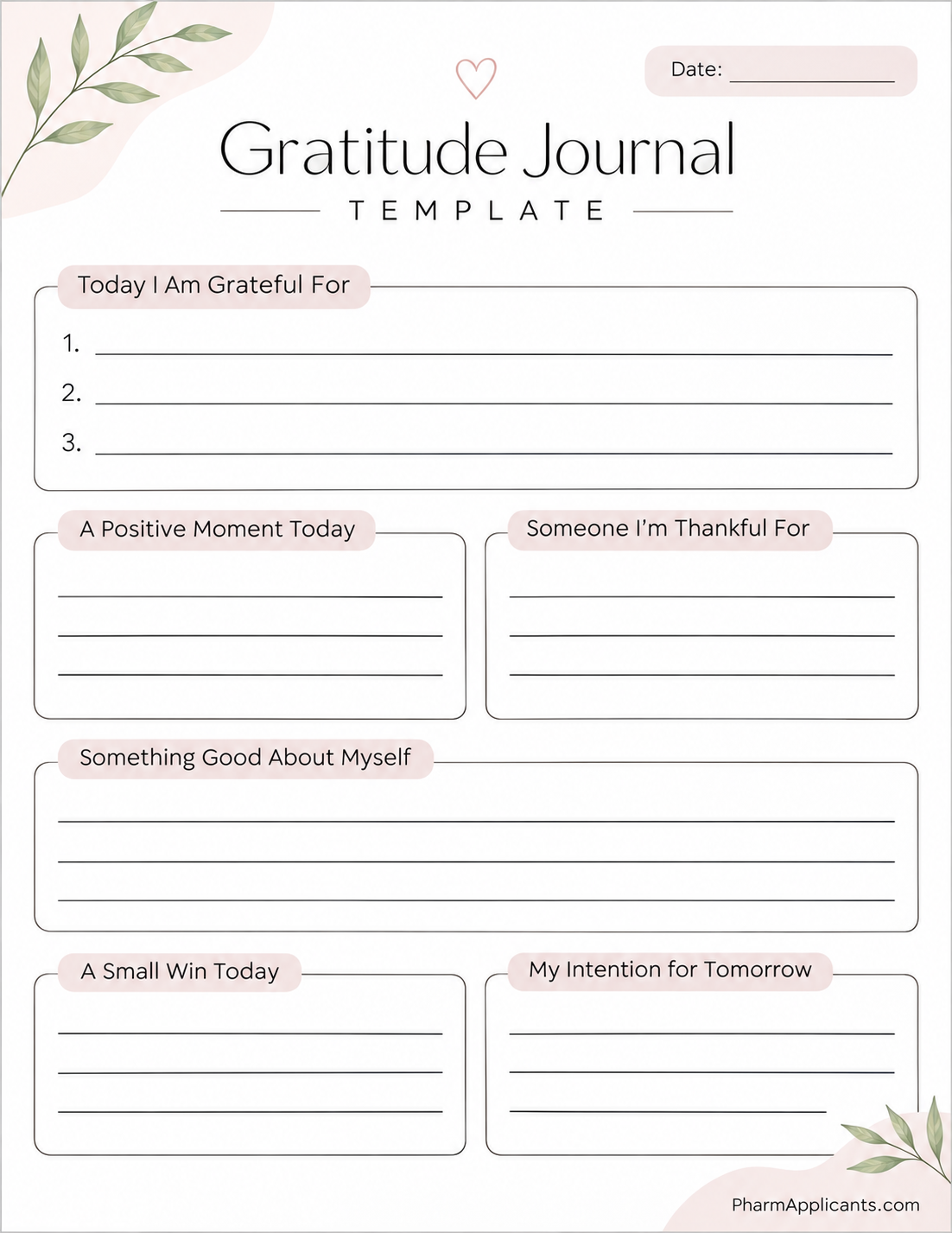
Starting a gratitude journal does not require special writing skills or a complicated routine. You only need a notebook, a printable gratitude journal template, or a digital document. With a few minutes of consistent practice, this simple habit can encourage a more positive outlook and help you become more aware of the good things around you.
What Is a Gratitude Journal?
A gratitude journal is a guided writing tool used to record experiences, people, opportunities, and everyday moments that make you feel thankful. It provides a structured space to reflect on positive experiences instead of focusing only on daily challenges.
Some people use a blank notebook, while others prefer a printable gratitude journal worksheet with helpful prompts and writing sections. A guided template can make the process easier, especially for beginners who are unsure what to write.
Common gratitude journal entries include:
- Three things you appreciate today.
- A person who made your day better.
- A positive experience you enjoyed.
- Something you learned from a difficult situation.
- A personal achievement, no matter how small.
- An opportunity you are looking forward to.
The purpose is not to pretend that everything is perfect. Instead, gratitude journaling helps you acknowledge positive experiences while making room for honest thoughts and difficult emotions.
Benefits of Keeping a Gratitude Journal
Developing a regular gratitude practice can support emotional awareness and encourage healthier reflection habits. Although journaling is not a replacement for professional mental health care, it can be a useful addition to a personal wellness routine.
1. Encourages a More Positive Perspective
Daily life often brings responsibilities, unexpected problems, and stressful situations. Writing about things you appreciate can help balance your attention by reminding you that positive experiences also exist alongside difficult moments.
2. Improves Self-Reflection
A gratitude journal gives you time to think about your experiences and recognize what matters most. Over time, reviewing previous entries may reveal recurring sources of happiness, meaningful relationships, and personal values.
3. Helps You Appreciate Small Moments
Not every meaningful experience needs to be a major achievement. Enjoying a favorite meal, receiving a thoughtful message, spending time outdoors, or completing a small task can all become valuable journal entries.
4. Creates a Record of Positive Experiences
Your journal becomes a personal collection of meaningful memories. When you have a difficult day, reading earlier entries may remind you of experiences and relationships that you appreciate.
What to Include in a Gratitude Journal
A useful gratitude journal should be simple enough to complete regularly. You do not need to fill every page with long paragraphs. A few thoughtful sentences can provide enough material for meaningful reflection.
Daily Gratitude List
Write down three to five things you appreciate each day. Try to include specific details rather than repeating general statements. For example, instead of writing that you are grateful for your family, describe a particular conversation or moment that made you feel supported.
Positive Moments and Small Wins
Record something enjoyable that happened during the day. It could be finishing an important task, learning something new, or finding time to relax.
People You Appreciate
Think about someone who has positively influenced your day. You can write about a family member, friend, colleague, teacher, or even someone who offered a small act of kindness.
Personal Growth and Lessons
Consider something you learned or a challenge that helped you develop patience, confidence, or a new perspective. Gratitude does not mean celebrating hardship. It simply allows you to recognize any useful lesson that came from an experience.
Intentions for Tomorrow
Finish your entry by identifying one positive action you would like to take the following day. This might involve showing appreciation to someone, spending more time outdoors, or making space for an activity you enjoy.
How to Start a Gratitude Journal
Starting a gratitude journal can be straightforward when you follow a simple routine. The goal is to create a habit that fits naturally into your schedule instead of making journaling feel like another responsibility.
1. Choose Your Preferred Journal Format
Decide whether you prefer a traditional notebook, a printable gratitude journal worksheet, or a digital template. A printable format is particularly useful if you enjoy handwriting and want a dedicated page for each entry.
2. Set Aside a Few Minutes Each Day
Choose a convenient time, such as after waking up or before going to bed. Start with five minutes rather than setting an unrealistic daily target.
3. Use Simple Writing Prompts
If you are unsure what to write, use questions to guide your thoughts:
- What made me smile today?
- Who made a positive difference in my day?
- What is something I often take for granted?
- What small accomplishment am I proud of?
- What experience do I want to remember?
4. Be Specific and Honest
Specific entries are often more meaningful than general statements. Describe what happened, why it mattered, and how it made you feel. You do not need to force positive thoughts when you are having a difficult day.
5. Review Your Previous Entries
Take a few minutes each week to revisit your writing. Look for experiences, relationships, and everyday activities that consistently bring meaning to your life.
Daily vs. Weekly Gratitude Journaling
There is no single correct way to maintain a gratitude journal. Your preferred schedule depends on your lifestyle, available time, and personal writing preferences.
Daily Gratitude Journal
A daily journal is ideal for people who enjoy short, regular writing sessions. You can record three things you appreciate, a positive moment, and one thought about the day.
Weekly Gratitude Journal
A weekly gratitude journal provides more room for broader reflection. Instead of writing every day, you can review the past seven days and identify the people, experiences, and accomplishments that mattered most.
Tips for Making Gratitude Journaling a Consistent Habit
Consistency is more important than writing a perfect entry. These practical tips can help you maintain your gratitude journaling routine.
- Start small: Write only three things you appreciate instead of trying to complete a full page.
- Keep your journal visible: Place your printable worksheet or notebook somewhere you regularly spend time.
- Use different prompts: Changing your questions can help prevent repetitive entries.
- Focus on ordinary experiences: Notice simple pleasures instead of waiting for special occasions.
- Avoid perfectionism: Missing a day does not mean you have failed. Simply continue when you are ready.
- Make it personal: Choose questions and writing sections that reflect your own experiences.
Free Gratitude Journal Template for Daily Reflection
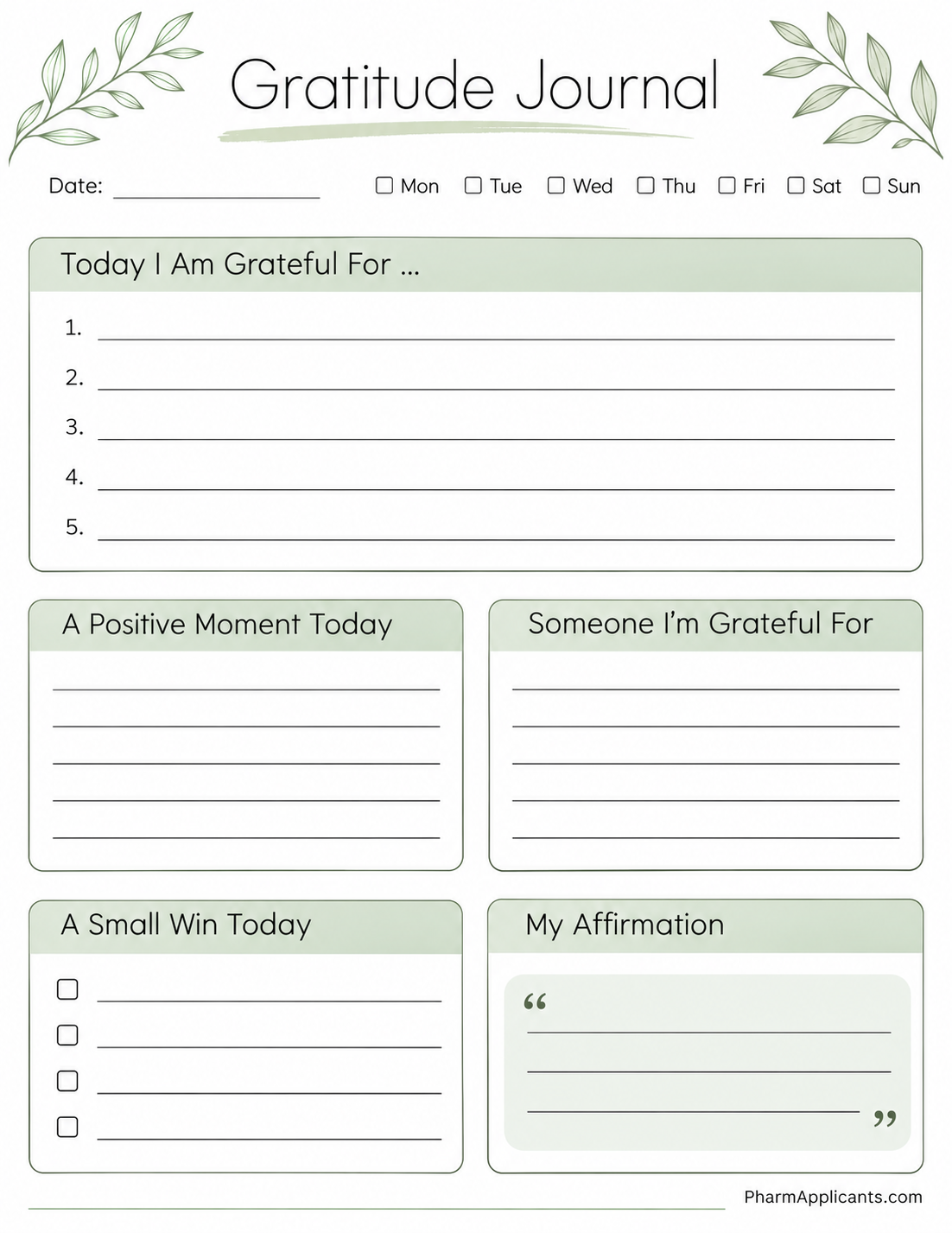
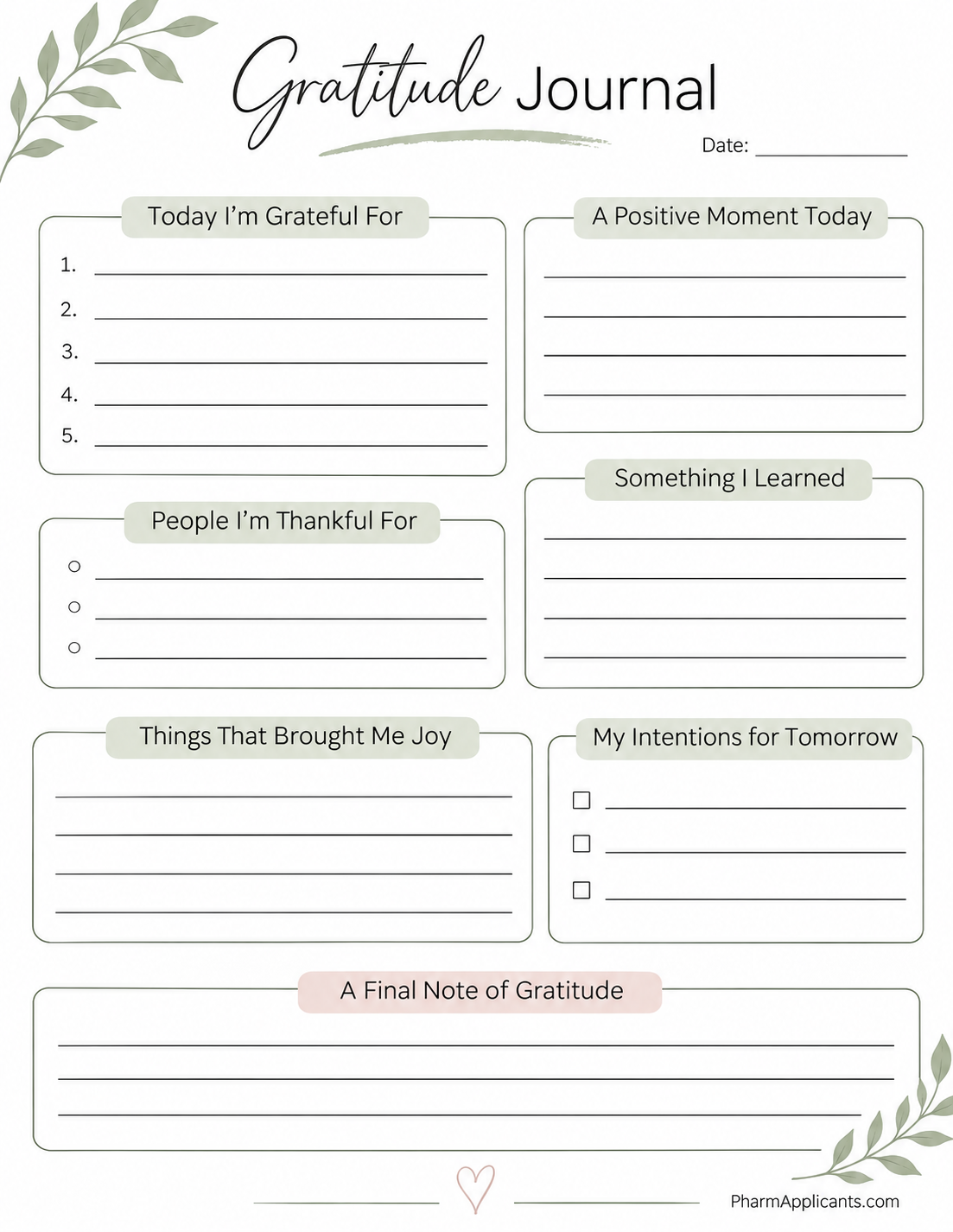
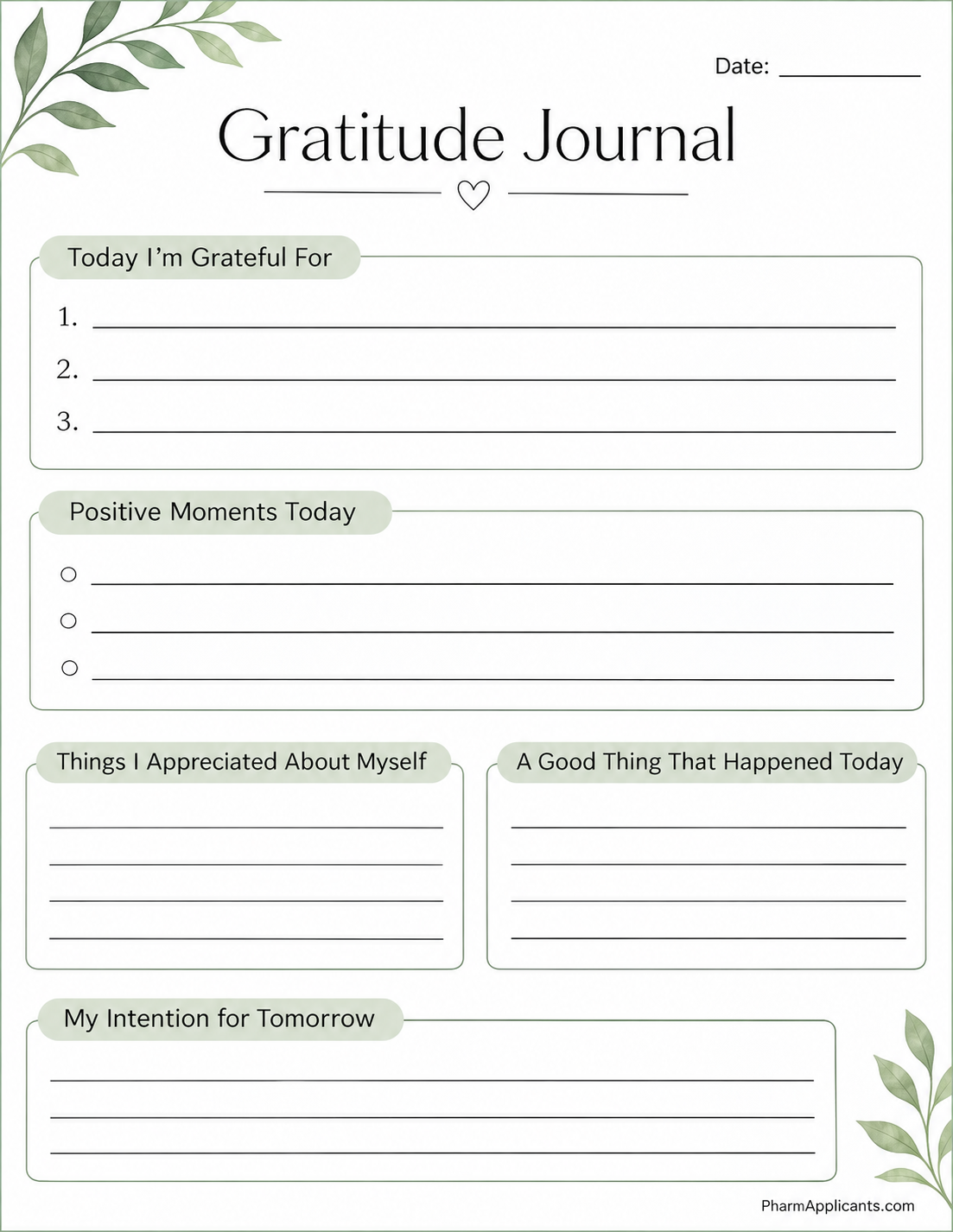
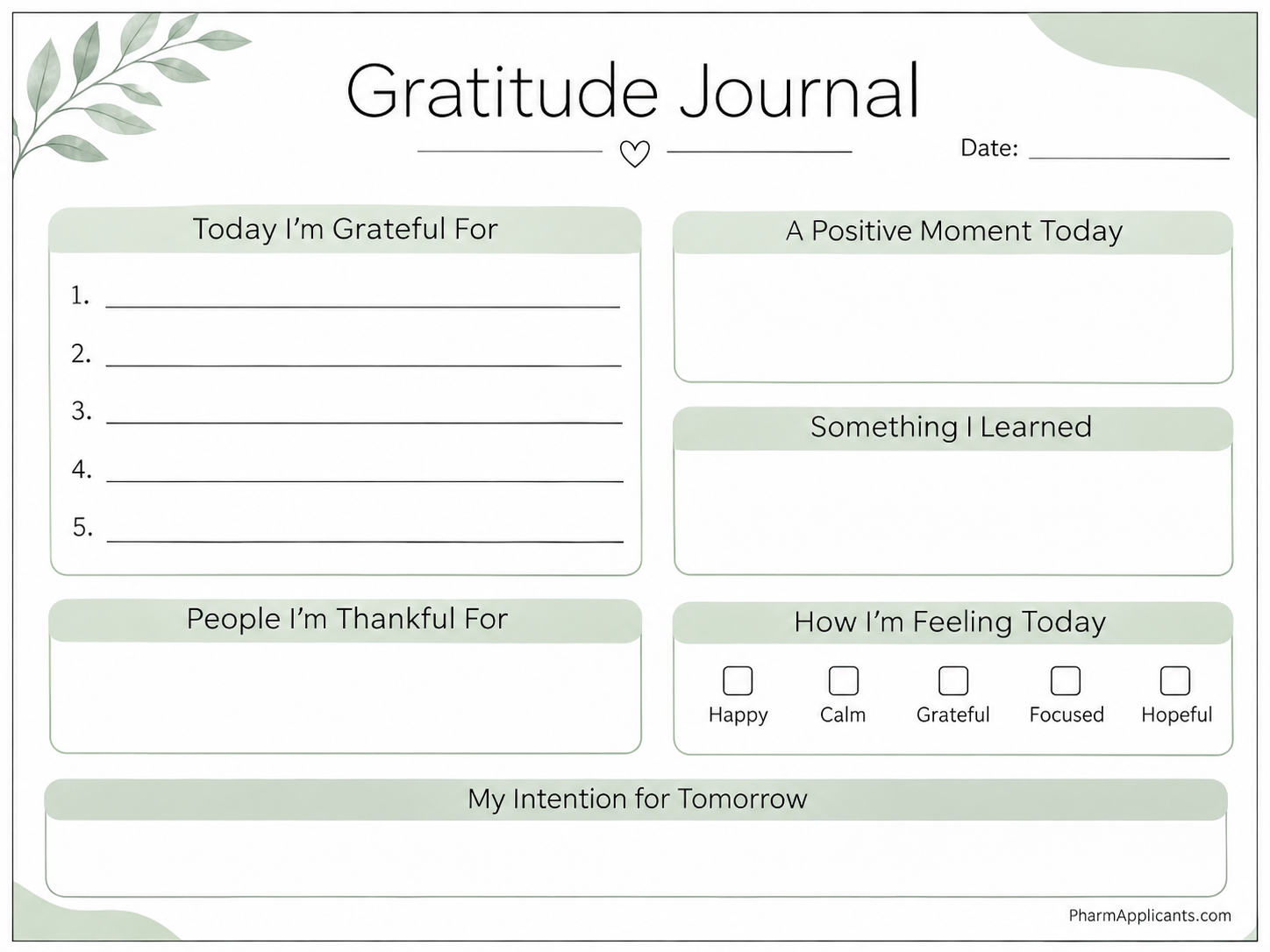
A printable gratitude journal template can make journaling easier by providing dedicated spaces for your daily thoughts. Rather than starting with a completely blank page, you can follow simple prompts and organize your reflections in one place.
Look for a worksheet that includes a date field, gratitude list, positive moments, personal reflections, and space for future intentions. These sections provide enough structure without making the journaling process complicated.
You can print a fresh copy whenever you need one or keep completed pages in a folder to create a personal record of your gratitude practice.
Common Gratitude Journaling Mistakes to Avoid
Although gratitude journaling is simple, a few common mistakes can make the habit less enjoyable. Being aware of them can help you create a more sustainable routine.
- Writing the same things every day: Try noticing different experiences and specific details instead of repeating identical entries.
- Forcing yourself to feel positive: Gratitude should not invalidate sadness, frustration, or other difficult emotions.
- Setting unrealistic expectations: You do not need to write several pages or journal at the same time every day.
- Comparing your experiences with others: Your gratitude practice should reflect what is meaningful in your own life.
- Ignoring your previous entries: Occasionally reviewing your writing can make the experience more rewarding.
Frequently Asked Questions About Gratitude Journals
What should I write in a gratitude journal?
Write about people, experiences, opportunities, and small moments you appreciate. You can also include personal achievements, positive memories, meaningful conversations, and lessons learned from everyday situations.
How many things should I write in a gratitude journal each day?
Three things per day are a practical starting point. You can write more whenever you feel inspired, but there is no required number of entries.
Is it better to write a gratitude journal in the morning or at night?
Both times can work well. Morning journaling allows you to begin the day with positive intentions, while evening journaling provides an opportunity to reflect on meaningful experiences. Choose the time that fits your routine.
Can beginners use a printable gratitude journal?
Yes. A printable gratitude journal is suitable for beginners because it provides simple prompts and organized writing spaces. You can follow the questions without worrying about how to structure each entry.
How long should I keep a gratitude journal?
You can continue for as long as the practice remains useful and enjoyable. Some people journal for 30 days as a starting challenge, while others make it a long-term personal habit.
Can a gratitude journal help with stress?
Gratitude journaling may help some people manage everyday stress by encouraging reflection on positive experiences and supportive relationships. However, it is not a treatment for anxiety, depression, or other mental health conditions.
What is the difference between a gratitude journal and a regular diary?
A regular diary can cover any event, thought, or feeling from your day. A gratitude journal focuses specifically on things you appreciate, positive experiences, meaningful relationships, and personal reflections.
Can I use a digital gratitude journal instead of a printable one?
Absolutely. You can use a notes application, digital document, or journaling application. The best format is the one that makes it easiest for you to maintain a consistent routine.
Conclusion
A gratitude journal is a practical way to become more aware of the positive experiences, relationships, and everyday moments that make life meaningful. By setting aside a few minutes to write about what you appreciate, you can develop a habit of thoughtful reflection and build a personal collection of meaningful memories.
You do not need an elaborate journal or a complicated writing routine to begin. Choose a format that works for you, start with a few simple prompts, and make the practice your own. A printable gratitude journal template can provide the structure you need to get started and help you turn small moments of thankfulness into a lasting daily habit.
Download: Gratitude Journal Template
