A well-organized handyman invoice should include customer information, a description of the services provided, materials used, labor costs, additional charges, and the final amount due. It also serves as a useful financial record for bookkeeping, tax preparation, and future reference.
In this guide, you will learn what to include in a handyman service invoice, how to calculate charges, and how to create an invoice that customers can easily understand. You can also use the printable handyman invoice templates to organize your billing process.
What Is a Handyman Invoice?
A handyman invoice is a billing document sent by a handyman or repair professional to a customer after completing a service or reaching an agreed billing milestone. It provides a detailed breakdown of the work performed and the amount the customer needs to pay.
For example, if you repair a kitchen cabinet, replace a faucet, install shelves, or complete routine home maintenance, you can issue an invoice listing each service and its associated cost.
Unlike a simple payment request, a professional handyman invoice provides a written record of the transaction. Both the service provider and customer can use it to verify the agreed work, review charges, and track payment status.
What to Include in a Handyman Invoice
A complete invoice should contain enough information to explain the service and payment requirements. Although the layout can vary, the following details are commonly included.
1. Business and Contact Information
Start with your handyman business information so customers know who issued the invoice. Include:
- Business or contractor name
- Business address
- Phone number
- Email address
- Website, if available
2. Customer Information
Add the customer’s full name, billing address, phone number, and email address. If the work takes place at a different location, include the service address separately.
3. Invoice Number and Dates
Every invoice should have a unique invoice number. Include the issue date and payment due date to make tracking and recordkeeping easier. A consistent numbering system can also help you locate previous transactions.
4. Description of Services
Describe each repair, installation, or maintenance task clearly. Avoid using vague descriptions such as general repairs. Instead, specify the actual work completed.
- Repaired a leaking kitchen faucet.
- Installed three wall-mounted shelves.
- Replaced damaged door hinges.
- Patched and painted a small drywall section.
- Performed routine bathroom maintenance.
5. Materials and Labor Costs
Separate material expenses from labor charges whenever possible. List the materials purchased, quantities, unit prices, labor hours, and hourly rates. This makes the invoice easier to understand and helps prevent confusion about the final price.
6. Additional Service Charges
Some jobs involve extra costs beyond standard labor and materials. Common examples include emergency call-out fees, after-hours service charges, travel expenses, and debris removal. Clearly identify these charges and explain when they apply.
7. Subtotal, Tax, and Total Due
Calculate the subtotal by adding the service, material, labor, and applicable additional charges. Then include any applicable sales tax or other required taxes. Display the final balance prominently so the customer knows exactly how much to pay.
Free Printable Handyman Invoice Templates
Using a printable handyman invoice template can save time and help you maintain consistent records. Instead of creating a new document for every customer, you can use a reusable form and fill in the details for each job.
Below are five invoice designs for different handyman billing needs. Choose the layout that best matches your services and business workflow.
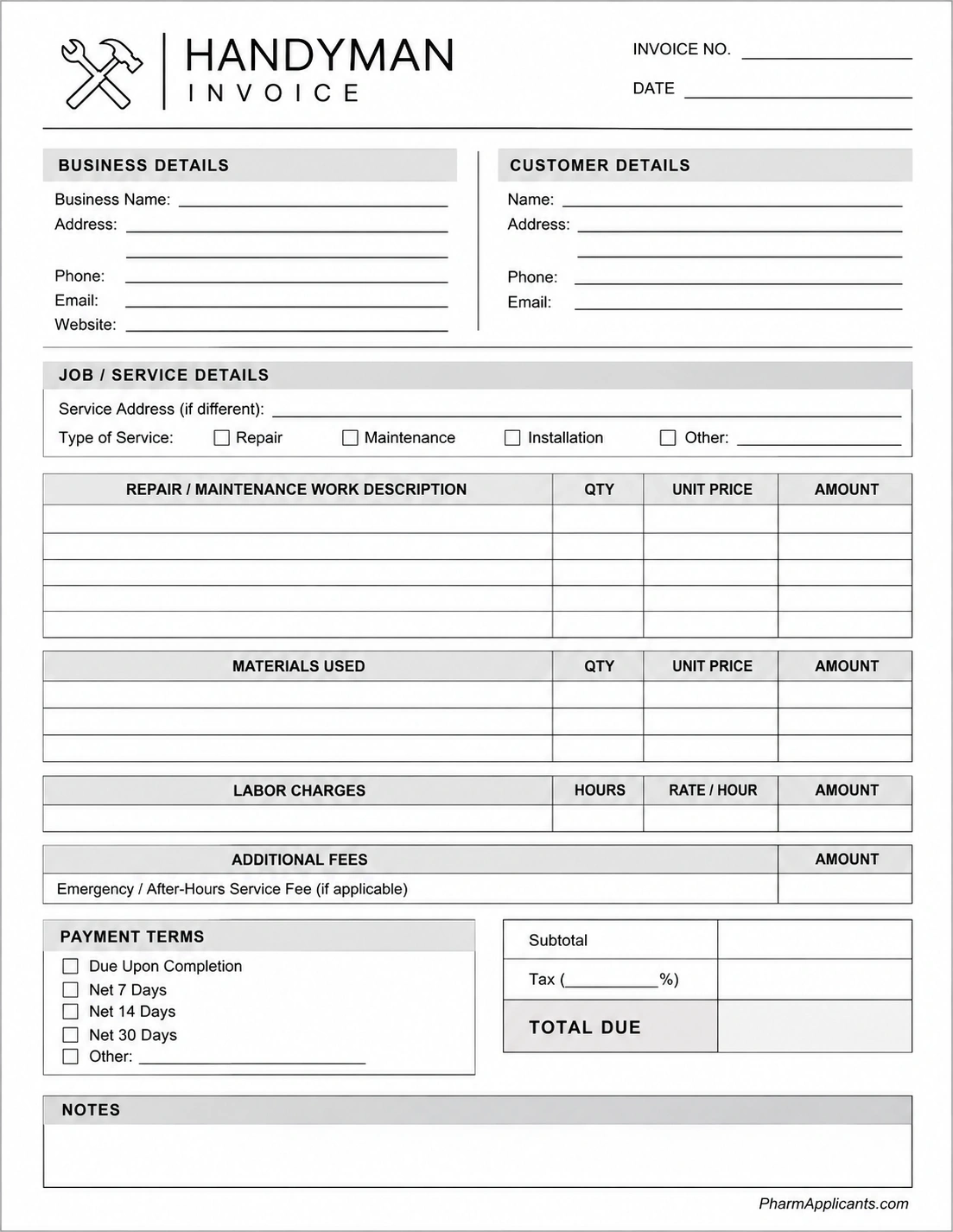
1. Standard Handyman Invoice Template
This standard layout is suitable for general home repairs, maintenance, and installation services. It provides dedicated sections for customer details, job descriptions, materials, labor, additional charges, and payment totals.
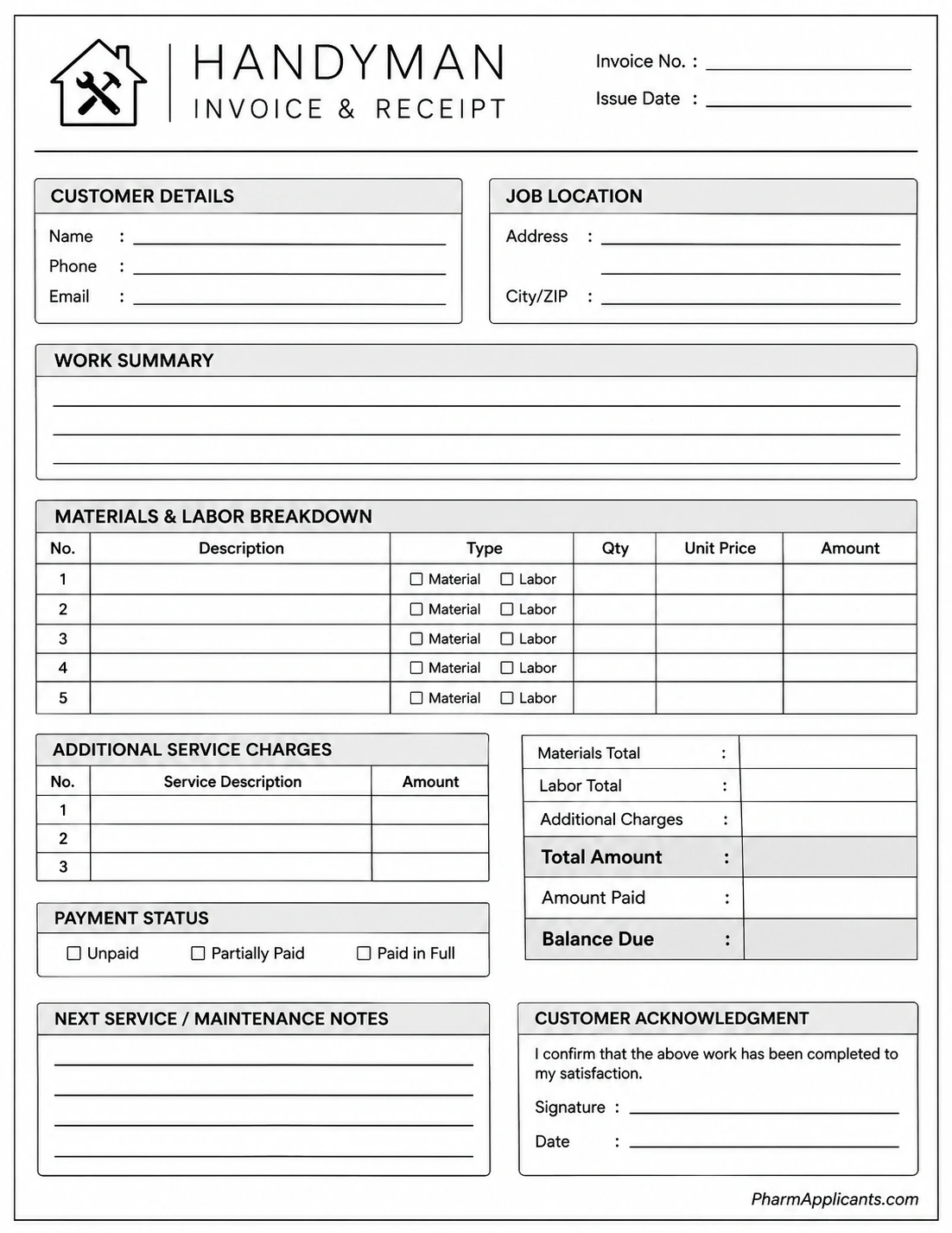
2. Handyman Invoice and Receipt Template
If you want to document both billing and payment, an invoice and receipt combination can be useful. This design includes payment status options, amount paid, and remaining balance. It works well for contractors who accept full or partial payments.
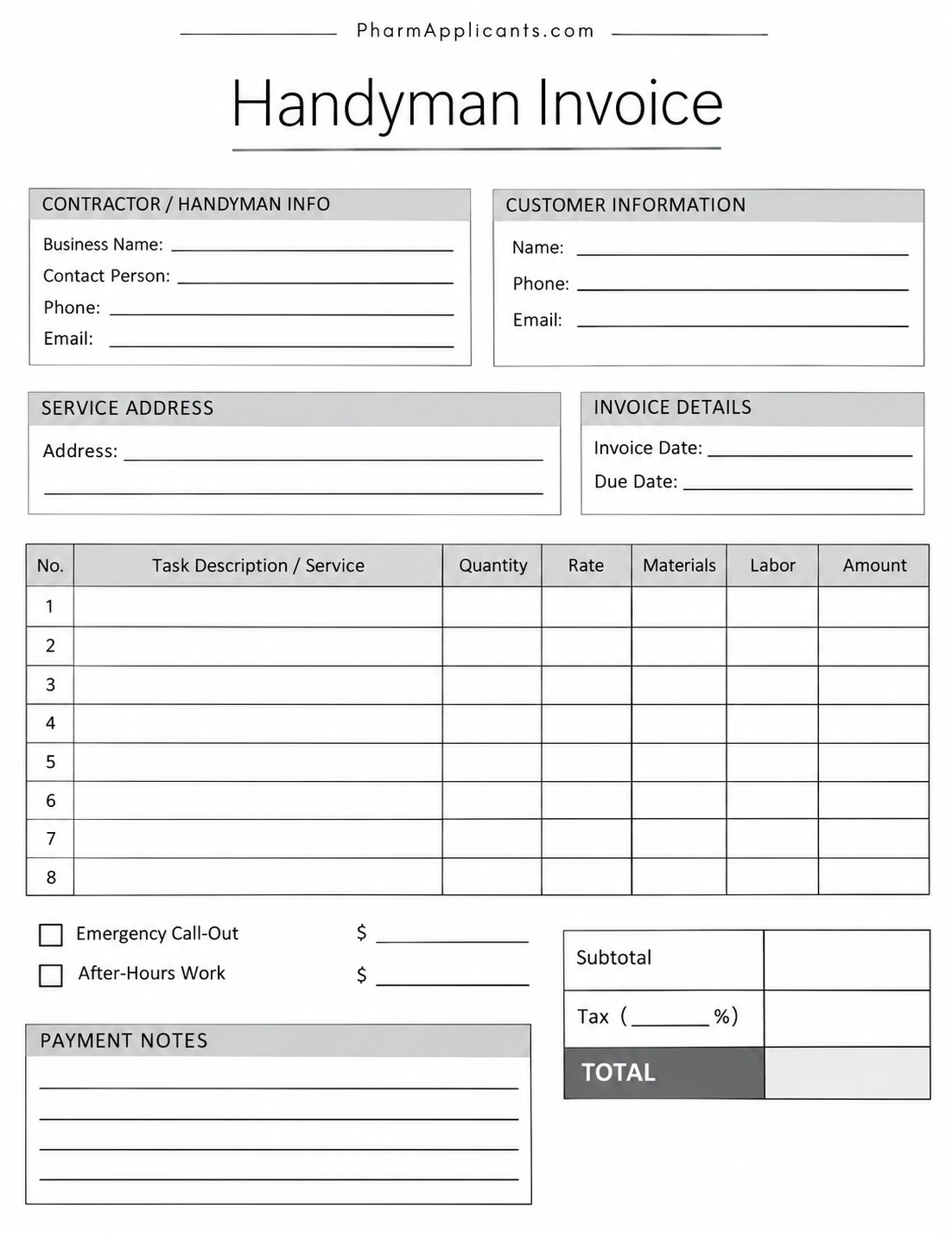
3. Itemized Handyman Invoice Template
An itemized invoice is ideal for projects involving multiple repairs or several types of materials. It allows you to list each task separately and show the corresponding quantity, rate, material cost, labor cost, and amount.
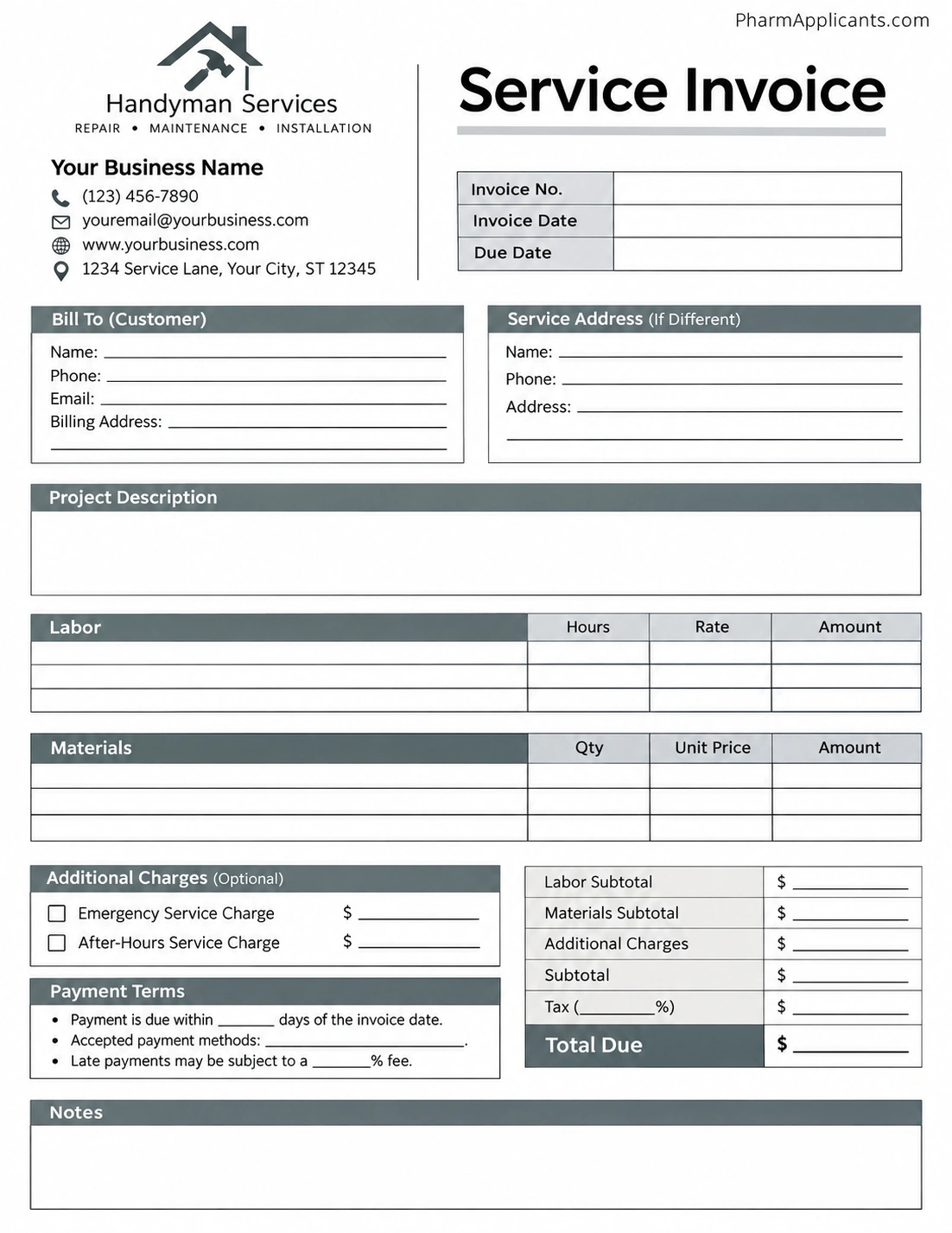
4. Professional Handyman Service Invoice
For independent contractors and established repair businesses, a professional service invoice provides a polished way to communicate with customers. It includes business branding, project details, payment terms, and a structured cost summary.
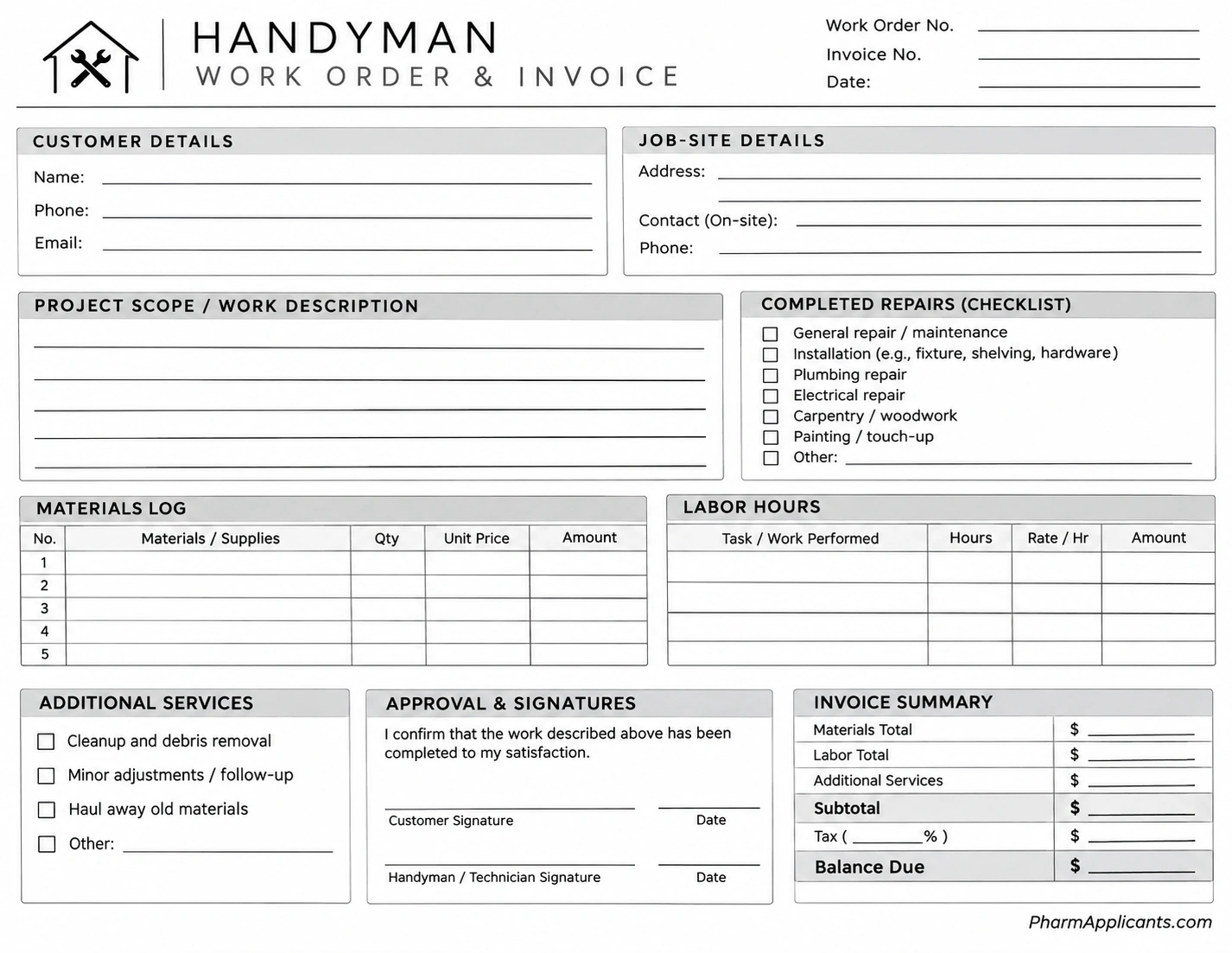
5. Handyman Work Order and Invoice Template
This combined form is useful when you want to document the job scope before or during the service and record the final charges afterward. It includes a repair checklist, materials log, labor hours, approval signatures, and an invoice summary.
How to Calculate Handyman Invoice Charges
Accurate pricing is important for maintaining customer trust and protecting your business income. Before sending an invoice, review every expense and make sure the calculations are correct.
Calculate Labor Costs
Multiply the number of hours worked by your hourly labor rate.
Example: If you charge $50 per hour and spend four hours completing a repair, your labor charge is $200.
Calculate Material Costs
Add the cost of all materials and supplies used for the project. If you purchase multiple items, list each one separately with its quantity and unit price.
Add Additional Fees
Include any previously agreed extra charges, such as emergency service fees, after-hours work, or transportation costs. Make sure customers understand these charges before billing them.
Calculate the Final Total
Use the following basic formula:
Total Due = Labor + Materials + Additional Charges + Applicable Tax – Payments Received
For example, a project with $200 in labor, $75 in materials, and a $25 additional service charge has a subtotal of $300 before applicable taxes. If the customer has already paid $100, the remaining balance is $200 before tax adjustments.
How to Create and Send a Handyman Invoice
Creating an invoice does not have to be complicated. Follow these steps to prepare a clear billing document for every completed job.
- Step 1: Choose an invoice template. Select a printable or digital layout that includes the necessary billing fields.
- Step 2: Enter your business details. Add your business name and contact information.
- Step 3: Add customer information. Verify the customer’s name, billing address, and service location.
- Step 4: Describe the completed work. List each repair, installation, or maintenance service.
- Step 5: Enter materials and labor. Record quantities, prices, hours, and applicable rates.
- Step 6: Add extra charges and taxes. Include only applicable and properly disclosed costs.
- Step 7: Review the total. Check all calculations, payment terms, and due dates.
- Step 8: Send the invoice. Deliver the completed document by email, printed copy, or another agreed method.
Tips for Managing Handyman Invoices
Good invoicing habits make your business easier to manage. They also help customers understand what they are paying for and when payment is expected.
- Use sequential invoice numbers. Assign a unique number to every invoice to simplify recordkeeping.
- Send invoices promptly. Prepare and deliver invoices soon after completing the work or reaching an agreed payment milestone.
- Be specific about services. Detailed descriptions reduce misunderstandings and billing disputes.
- Set clear payment terms. State whether payment is due immediately, within seven days, or by another agreed deadline.
- Keep copies of invoices. Store digital or printed records for accounting and tax preparation.
- Track unpaid balances. Maintain a list of outstanding invoices and follow up professionally when necessary.
- Confirm additional charges. Discuss emergency fees, extra materials, and changes in project scope before adding them to the bill.
Is a Handyman Invoice a Legal Document?
A handyman invoice is an important business record that documents services provided and payment requested. It can help establish what work was billed, when the invoice was issued, and how much the customer was asked to pay.
However, an invoice does not automatically replace a signed service agreement, contract, work authorization, or proof of payment. For better documentation, keep copies of estimates, customer approvals, receipts, work orders, and payment confirmations.
Legal and tax requirements vary depending on your location, business structure, and the type of service provided. Check the applicable local rules to determine which invoice details and records you must retain.
Frequently Asked Questions About Handyman Invoices
What should a handyman invoice include?
A handyman invoice should include the business name, customer details, invoice number, issue date, due date, service description, material costs, labor charges, additional fees, applicable taxes, and total amount due.
Can I create a handyman invoice for free?
Yes. You can use a free printable handyman invoice template and fill it out manually or edit a digital copy. A reusable template helps you create consistent invoices without designing a new document for every customer.
Should materials and labor be listed separately?
Yes. Separating materials and labor is generally recommended because it helps customers understand how the project cost is calculated. It also makes your financial records easier to review.
How do I charge for emergency handyman services?
You can include an emergency call-out fee or an after-hours service charge when applicable. Explain the fee to the customer before performing the work and list it separately on the invoice.
When should a handyman send an invoice?
Many handymen send invoices immediately after completing a job. For larger projects, billing may follow agreed milestones or deposit arrangements. The timing should be explained in the service agreement.
Can a handyman invoice be used as a receipt?
An invoice can also serve as a receipt when it clearly documents payment received. Include the payment date, amount paid, payment method, and remaining balance, if any.
How long should I keep handyman invoices?
Keep invoices and supporting records according to the applicable tax and business recordkeeping requirements in your jurisdiction. Retaining organized digital copies can make future accounting and tax preparation easier.
Can I send a handyman invoice by email?
Yes. You can send a PDF invoice by email, provided it contains the necessary billing information and is easy for the customer to read and save.
Conclusion
A professional handyman invoice makes it easier to bill customers, document completed work, and maintain accurate financial records. By including clear service descriptions, separate material and labor costs, additional charges, and payment terms, you can create invoices that are simple to understand and manage.
Whether you handle occasional home repairs or operate a full-time handyman business, a reusable invoice template can save time and improve your billing process. Choose one of the printable handyman invoice templates above and customize it for your next service job.
Download: Handyman Invoice Template Word
