A habit tracker for bullet journal is a simple yet effective way to monitor daily routines, build positive habits, and stay consistent with personal goals. Instead of relying on memory, you can use a visual tracking system to see your progress throughout the month.
Whether you want to drink more water, exercise regularly, read every day, or improve your sleep schedule, a bullet journal habit tracker makes it easier to stay accountable. You can create your own layout from scratch or use a printable habit tracker to save time and keep your journal organized.
In this guide, you will discover different habit tracker layouts, practical ideas for everyday routines, and tips for using printable templates in your bullet journal. These options make habit tracking simple, flexible, and enjoyable.
What Is a Habit Tracker for Bullet Journal?
A habit tracker for bullet journal is a dedicated page or printable worksheet designed to record whether you complete specific habits over a chosen period. Most layouts use a calendar-style grid, checklist, or monthly chart where you mark each day after completing a routine.
The main purpose is to make your habits visible. When you can see your progress, it becomes easier to recognize patterns, identify challenges, and stay motivated.
Common habits you can monitor include:
- Health: Drinking enough water, exercising, taking vitamins, and eating balanced meals.
- Personal development: Reading books, learning new skills, and practicing a hobby.
- Productivity: Planning daily tasks, avoiding distractions, and completing important projects.
- Wellness: Meditating, journaling, practicing gratitude, and getting enough sleep.
- Household routines: Cleaning, organizing, doing laundry, and maintaining a tidy space.
Unlike a traditional to-do list, a habit tracker focuses on consistency over time rather than individual tasks. It helps you understand how frequently you practice a behavior and whether your routine is becoming more consistent.
Benefits of Using a Bullet Journal Habit Tracker
Adding a habit tracker to your bullet journal can make everyday routines easier to manage. It also provides a simple way to evaluate your progress without complicated planning systems.
1. Build Consistent Daily Routines
Consistency is important when developing a new habit. A daily tracker reminds you of the activities you want to practice and encourages you to make time for them.
For example, if your goal is to read for 20 minutes every day, marking each completed session helps you establish a regular reading routine.
2. Visualize Your Progress
A visual habit tracker makes your achievements easier to recognize. Each completed box, colored circle, or checked square represents a small step toward your goal.
Over several weeks, these marks create a clear picture of your consistency. You can also identify which habits need more attention.
3. Identify Patterns and Challenges
Tracking habits can reveal useful information about your daily behavior. You might notice that you exercise more frequently in the morning or struggle to read when your schedule becomes busy.
These observations help you adjust your routine and choose more realistic goals.
4. Keep Your Goals Organized
A bullet journal habit tracker keeps several routines in one convenient place. Instead of using separate notes or applications, you can monitor your health, productivity, and personal development habits on a single page.
Different Habit Tracker for Bullet Journal Layout Ideas
There is no single correct way to design a habit tracker. Your layout should match your journaling style, available space, and the number of habits you want to monitor.
Here are some practical layouts to consider.
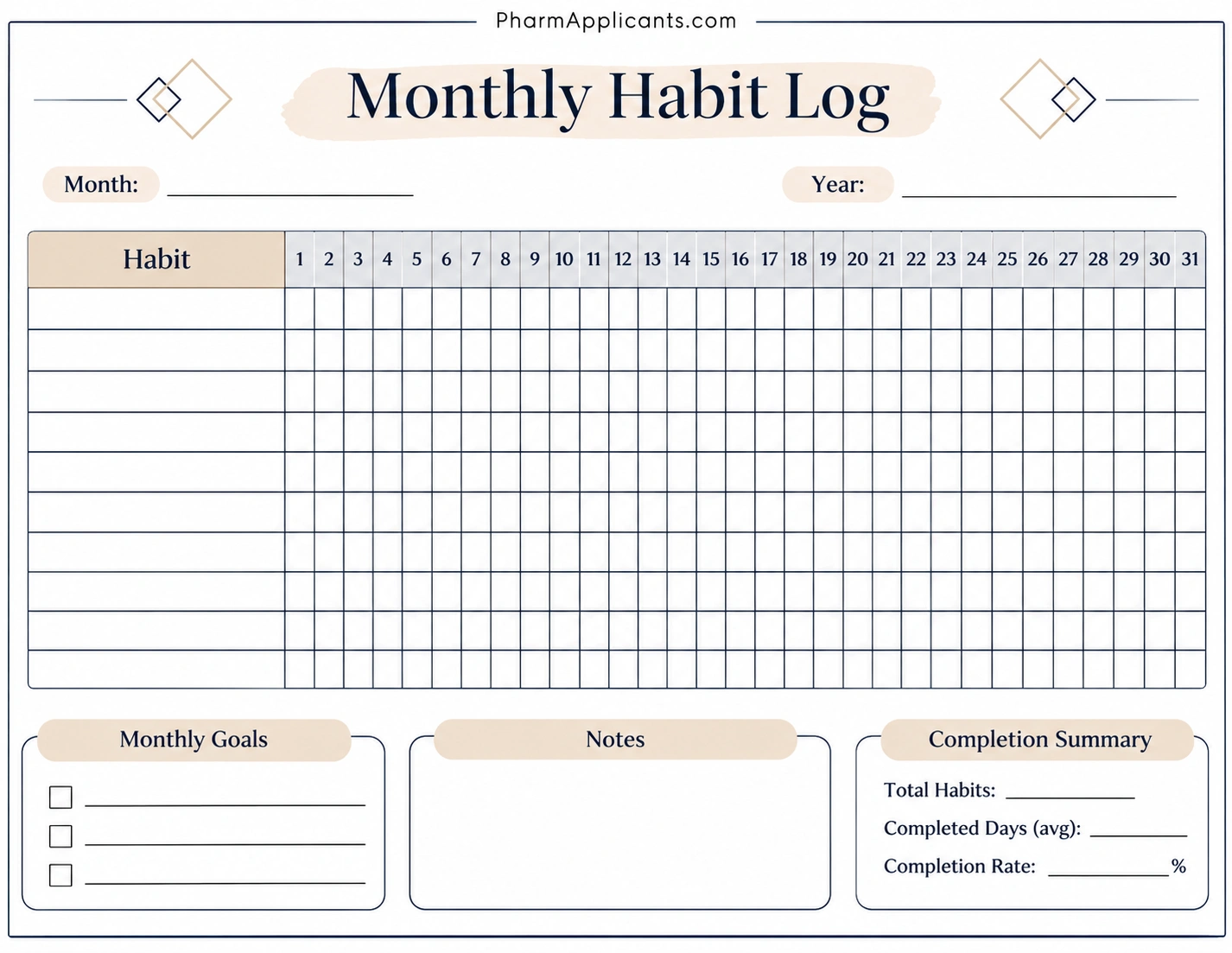
1. Monthly Habit Tracker Grid
A monthly habit tracker grid is one of the most popular bullet journal layouts. It places your selected habits in rows and the days of the month in columns.
Each day, you simply mark the corresponding box when you complete a habit. This format makes it easy to monitor several routines simultaneously.
It works particularly well for tracking:
- Daily water intake.
- Exercise and physical activity.
- Reading time.
- Sleep schedules.
- Morning and evening routines.
A monthly grid is especially useful if you want to compare your consistency across 30 or 31 days.
2. Weekly Habit Tracker Layout
A weekly habit tracker is a good alternative if you prefer a shorter tracking period. Instead of looking at an entire month, you can focus on seven days at a time.
This layout typically includes a checklist with Monday through Sunday columns. You can also add a small section for weekly goals and personal notes.
Consider using a weekly layout when:
- You are starting a new routine.
- You want to review your progress every weekend.
- You prefer a smaller and simpler journal page.
- You want to track habits that change from week to week.
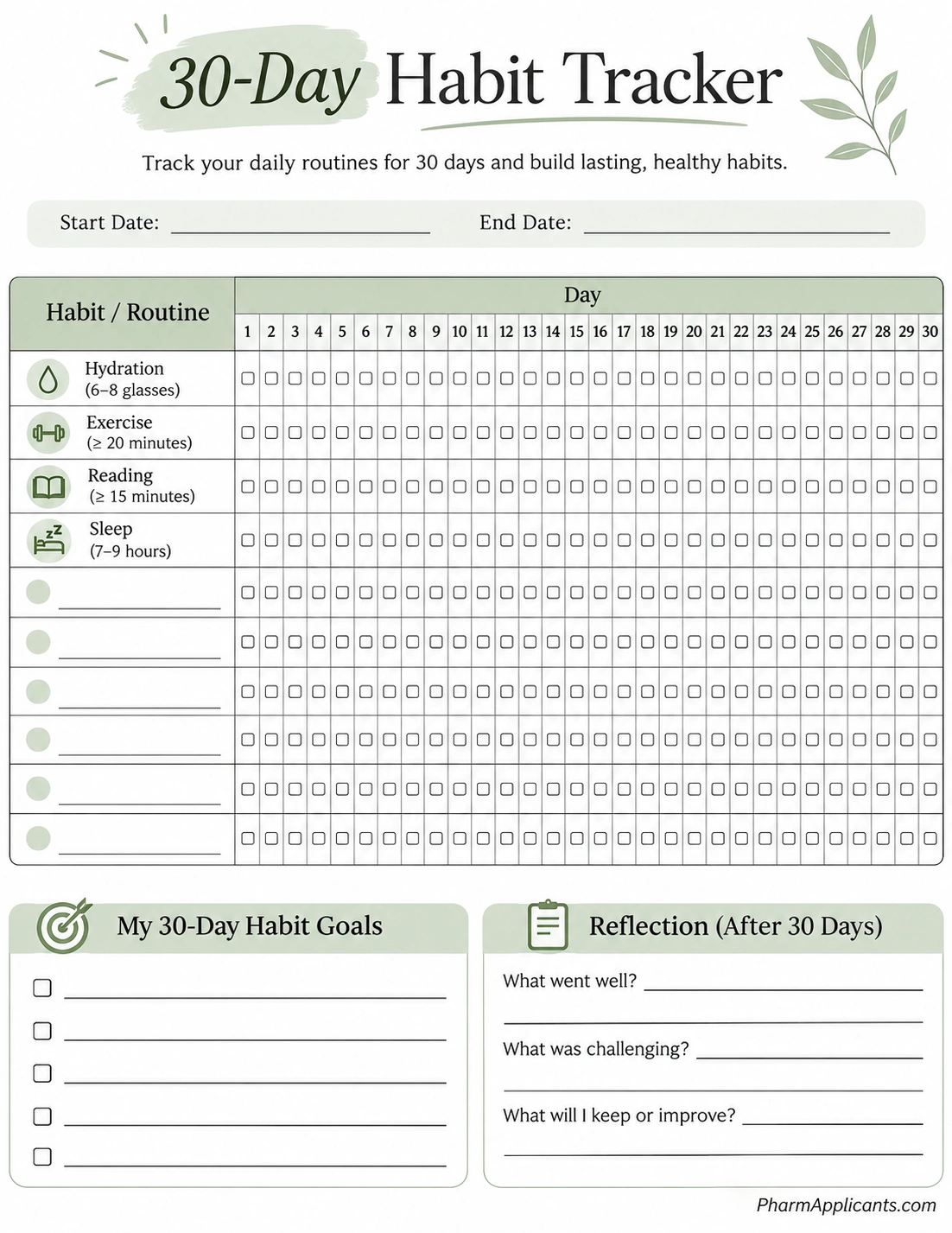
3. 30-Day Habit Tracker
A 30-day habit tracker is useful when you want to focus on a specific goal for a defined period. It gives you a clear starting point and an easy way to review your progress at the end.
For example, you could use a 30-day tracker to develop a daily reading routine, improve hydration, practice meditation, or establish a consistent exercise schedule.
Choose a few habits that support your main objective. Then mark each day you successfully complete them.
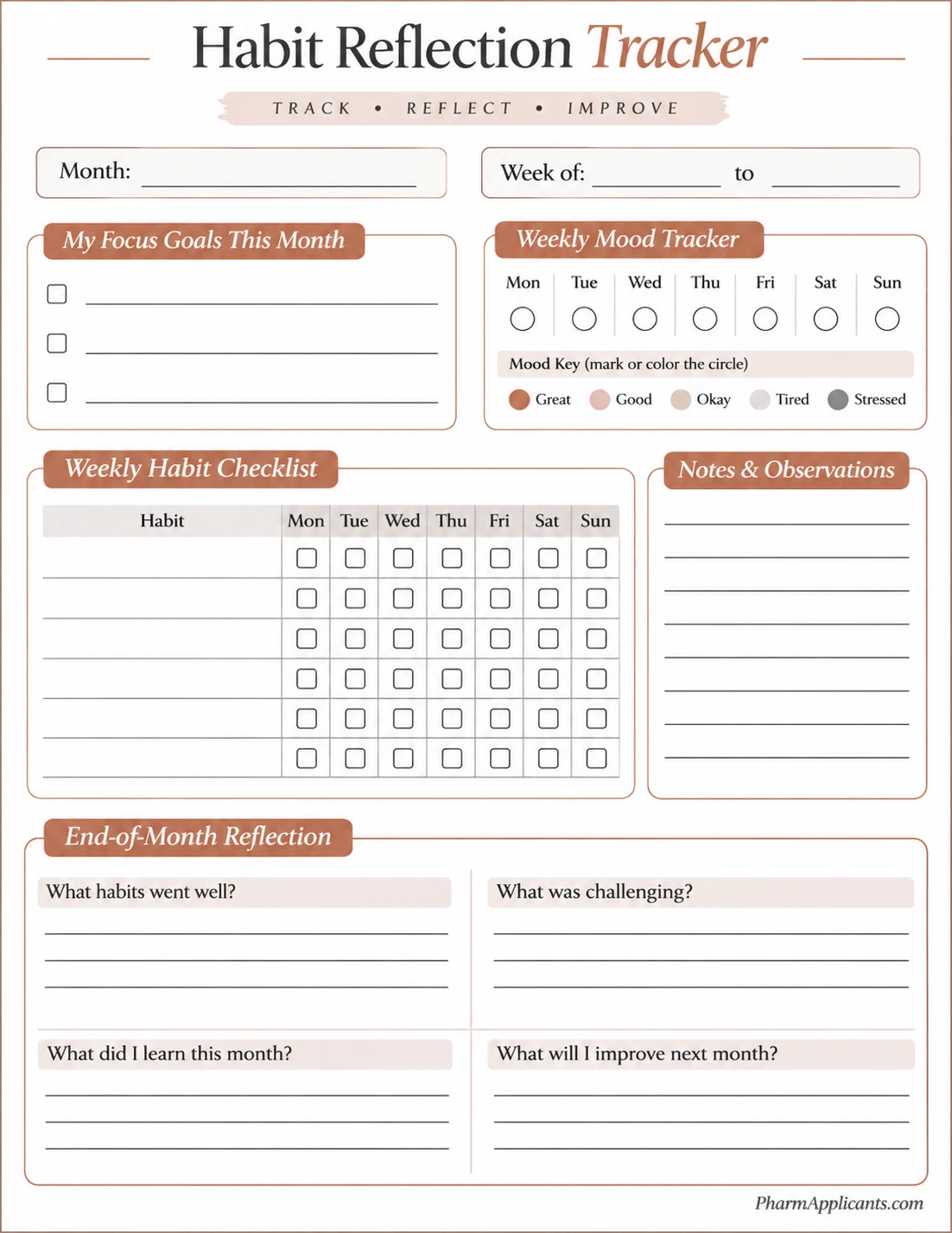
4. Habit Tracker with Reflection Section
Tracking completed habits is useful, but reflecting on your experience can make the process even more valuable.
A reflection-based habit tracker combines daily checklists with space for reviewing your behavior, mood, and challenges.
You can include questions such as:
- Which habits did I complete most consistently?
- What made certain habits difficult?
- What positive changes did I notice?
- What should I improve next week or month?
This approach encourages you to understand your progress instead of simply counting completed days.
Best Habits to Track in Your Bullet Journal
Choosing the right habits is key to creating an effective tracker. Start with activities that support your lifestyle and personal priorities.
Health and Fitness Habits
Health-related habits are popular because you can incorporate them into everyday routines.
- Drink 8 glasses of water.
- Exercise for 20 to 30 minutes.
- Walk at least 5,000 steps.
- Eat fruits and vegetables.
- Get 7 to 9 hours of sleep.
- Stretch in the morning.
Productivity Habits
If you want to become more organized, track activities that help you manage your time and responsibilities.
- Write a daily to-do list.
- Complete the most important task.
- Limit social media usage.
- Plan the next day.
- Keep your workspace organized.
Personal Growth Habits
Personal development habits help you make steady progress toward long-term goals.
- Read for 20 minutes.
- Practice a foreign language.
- Learn something new.
- Write in a journal.
- Practice gratitude.
- Spend time on a creative hobby.
How to Create a Habit Tracker for Bullet Journal
Creating your own habit tracker does not require advanced drawing skills. A simple grid and a few clearly defined routines are enough to get started.
Step 1: Choose Your Tracking Period
Decide whether you want to track habits weekly, monthly, or for 30 consecutive days. Monthly tracking is suitable for ongoing routines, while a 30-day tracker works well for focused personal challenges.
Step 2: Select Your Habits
Choose between three and eight habits for your first tracker. Keeping the list manageable makes it easier to maintain consistency.
Instead of writing a broad goal such as getting healthier, choose specific actions such as drinking water regularly or walking for 20 minutes.
Step 3: Design Your Layout
Create a table with your habits listed vertically and the days of the month arranged horizontally. Alternatively, use a weekly checklist if you prefer a smaller format.
Leave enough space to mark completed activities without making the page difficult to read.
Step 4: Choose a Tracking Method
Use a simple marking system to record your daily progress. For example:
- Checkmark: Habit completed.
- Empty box: Habit not completed.
- Colored circle: Different levels of progress.
- Dot: Habit partially completed.
Choose a system that is easy to understand and use consistently.
Step 5: Review Your Progress
At the end of each week or month, review your completed habits. Identify what worked, what did not, and whether your goals need adjustment.
Remember that the purpose of tracking is to improve your routines, not to achieve a perfect record.
Tips for Using Printable Habit Tracker Templates
If you do not want to draw your own journal layouts, printable habit tracker templates provide a convenient alternative. You can print them at home and attach them directly to your bullet journal.
Follow these tips to get the most out of your printable worksheets.
- Choose the right paper size: US Letter paper is a practical option for printing at home. Check the template dimensions before printing.
- Use a simple color scheme: Choose two or three complementary colors to keep your tracker clean and readable.
- Keep your habits realistic: Select routines that fit your current schedule and lifestyle.
- Place your tracker somewhere visible: Keep it in a frequently used section of your journal.
- Update it daily: Spend a minute each evening recording your progress.
- Print extra copies: Keep additional worksheets available for future months or new habit challenges.
You can also combine printable trackers with other bullet journal pages, such as monthly calendars, weekly planners, goal-setting worksheets, and daily reflection pages.
Common Habit Tracking Mistakes to Avoid
Although habit tracking is simple, a few common mistakes can make it difficult to maintain your system.
Tracking Too Many Habits
Adding too many routines at once can make your tracker overwhelming. Start with a small number of habits and add more only when your current routines become manageable.
Setting Unrealistic Goals
Goals should match your available time and energy. If you rarely exercise, starting with a short 10-minute workout may be more realistic than planning an hour-long session every day.
Giving Up After Missing a Day
Missing one day does not mean you have failed. Habits develop through repeated effort, and occasional interruptions are normal.
Simply return to your routine the next day and continue tracking your progress.
Ignoring Your Monthly Review
A tracker becomes more useful when you regularly evaluate the information it collects. Take a few minutes to identify successful routines and areas that need improvement.
Frequently Asked Questions About Habit Trackers for Bullet Journals
1. What should I include in a bullet journal habit tracker?
Include habits that support your personal goals, such as drinking water, exercising, reading, sleeping on time, journaling, and planning daily tasks. You can also add sections for monthly goals, notes, and progress reviews.
2. How many habits should I track at once?
Three to eight habits are a reasonable starting point for most beginners. A smaller list makes your tracker easier to maintain and helps you focus on the routines that matter most.
3. Is a weekly or monthly habit tracker better?
Both formats are useful for different purposes. A weekly habit tracker provides more frequent opportunities for review, while a monthly habit tracker gives you a broader view of your consistency over time.
4. Can I use a printable habit tracker in a bullet journal?
Yes. You can print a habit tracker and attach it to your bullet journal using glue, washi tape, or adhesive tabs. You can also keep the printed worksheet separately in a binder or planner.
5. What size should a printable habit tracker be?
US Letter (8.5 × 11 inches) is a common printing size in the United States. However, you can also resize a printable to fit your journal dimensions, provided the text and tracking boxes remain readable.
6. How do I stay motivated to use a habit tracker?
Choose realistic habits, update your tracker at the same time each day, and review your progress regularly. Celebrate small improvements rather than expecting perfect results every day.
7. What is the difference between a habit tracker and a daily planner?
A habit tracker monitors recurring behaviors over time, while a daily planner organizes appointments, tasks, and activities for a particular day. Both tools can complement each other in a bullet journal.
8. Can I track multiple habits on one page?
Yes. A monthly grid can accommodate several habits on a single page. List each habit in a separate row and use the columns to record daily completion. Make sure the boxes are large enough to mark comfortably.
Conclusion
A habit tracker for bullet journal is a practical tool for building consistent routines, monitoring personal progress, and staying focused on everyday goals. Whether you prefer a monthly grid, weekly checklist, 30-day challenge, or reflection-based layout, the best tracker is one that fits your lifestyle.
You do not need an elaborate design or dozens of habits to get started. Choose a few meaningful routines, record your progress regularly, and review your results at the end of each week or month.
If you want a simpler way to organize your routines, try using a printable habit tracker template. Print your favorite layout, add it to your bullet journal, and start building better habits one day at a time.
