Building better habits does not have to be complicated. Whether you want to exercise more, drink enough water, read regularly, or improve your morning routine, small daily actions can make a meaningful difference over time. A daily habit tracker makes this process easier by helping you record your progress and stay consistent with the routines that matter most.
Instead of relying on memory or motivation alone, you can use a printable habit tracker to see which habits you complete each day. It provides a simple visual reminder of your goals, encourages accountability, and helps you recognize your progress. Whether you prefer tracking habits for 7, 21, 30, or 31 days, the right worksheet can help you develop a routine that fits your lifestyle.
What Is a Daily Habit Tracker?
A daily habit tracker is a worksheet, journal, or digital tool used to monitor specific activities over a period of time. It usually includes a list of habits and a calendar-style grid where you mark each activity when it is completed.
For example, you might track drinking eight glasses of water, exercising for 20 minutes, reading ten pages, or going to bed before 10:30 PM. Each completed activity receives a checkmark, colored box, or other visual indicator.
The main purpose of a habit tracking worksheet is to make daily routines easier to monitor. It allows you to identify patterns, measure consistency, and understand which habits need more attention.
Why Should You Use a Daily Habit Tracker?
Creating a new routine can be challenging, especially when you have several personal or professional goals. A habit tracker provides a practical way to organize those goals and monitor your daily actions.
1. Build Consistency
Consistency is often more important than intensity when developing a new habit. A daily checklist encourages you to repeat small actions regularly rather than depending on occasional bursts of motivation.
2. Make Your Progress Visible
Seeing completed boxes on a habit tracking chart provides a clear picture of your efforts. Instead of wondering whether you have been consistent, you can review your progress at a glance.
3. Improve Accountability
Writing down your daily goals creates a simple commitment to yourself. When you review your tracker every evening, you can identify completed tasks and recognize areas that need improvement.
4. Identify Patterns and Challenges
A monthly habit tracker can reveal when you are most consistent and when you tend to miss certain activities. For example, you might notice that exercising is easier on weekdays than weekends. Recognizing these patterns helps you adjust your routine.
What Habits Should You Track Daily?
The best habits to include in your daily habit tracker depend on your lifestyle, priorities, and personal goals. Start with activities that provide meaningful benefits without making your schedule unnecessarily complicated.
Health and Wellness Habits
- Drink enough water throughout the day.
- Exercise or walk for at least 20 minutes.
- Eat balanced and nutritious meals.
- Get enough sleep each night.
- Spend a few minutes stretching.
Productivity and Personal Growth Habits
- Read for 10 to 20 minutes.
- Write down daily priorities.
- Complete an important task before checking social media.
- Practice a new skill.
- Review your goals before going to bed.
Mindfulness and Self-Care Habits
- Practice meditation or deep breathing.
- Write in a gratitude journal.
- Limit unnecessary screen time.
- Spend time on a relaxing activity.
- Maintain a consistent bedtime routine.
Choose habits that genuinely support your priorities. You do not need to track everything at once. Starting with three to five habits is often more manageable than creating an extensive list.
How to Use a Printable Daily Habit Tracker
A printable daily habit tracker is easy to use and does not require an application, subscription, or digital device. You only need a printed worksheet and a pen or pencil.
Step 1: Choose Your Tracking Period
Decide how long you want to monitor your habits. Common options include a weekly, 21-day, or monthly habit tracker. Choose a period that matches your goals and makes it easy to review your progress.
Step 2: Write Down Your Habits
List the specific activities you want to complete. Use clear and measurable descriptions rather than broad goals. For example, write “Walk for 20 minutes” instead of simply writing “Be healthier.”
Step 3: Mark Each Completed Habit
Every time you complete an activity, mark the corresponding box on your worksheet. You can use a checkmark, small circle, or colored pencil. Try to update your tracker immediately after completing each activity.
Step 4: Review Your Progress Regularly
At the end of each day or week, review your completed habits. Look for patterns and consider whether your goals are realistic. If a habit is consistently difficult to complete, adjust the schedule or make the activity smaller.
Step 5: Reflect and Set New Goals
When your tracking period ends, evaluate your results. Identify which habits became easier, which ones need more attention, and what changes could make your next tracking period more successful.
Choose the Right Habit Tracker for Your Goals
Different tracking periods serve different purposes. Selecting the right printable habit tracker can make your routine easier to organize.
7-Day Habit Tracker
A weekly habit tracker is useful for beginners who want to experiment with a new routine. It provides a short review period and allows you to make adjustments every week. You can also use it to plan weekly priorities and monitor your mood or energy levels.
21-Day Habit Tracker
A 21-day habit tracker provides a longer period for monitoring consistency. It is useful for people who want to focus on a small group of habits and evaluate their progress over three weeks. Remember that habit formation does not follow a universal 21-day rule. The time required varies depending on the behavior and individual circumstances.
30-Day or 31-Day Habit Tracker
A monthly habit tracker is ideal for monitoring routines over a full calendar month. It allows you to record daily activities, identify missed days, and review your overall consistency. A 31-day tracker can also accommodate months with 31 days.
Choose a format that feels practical. The best tracker is one you can maintain without adding unnecessary pressure to your daily schedule.
Tips for Getting Better Results From Your Habit Tracker
Using a worksheet is simple, but developing a consistent routine requires patience and realistic expectations. These practical tips can help you get more value from your habit tracking system.
- Start small: Begin with a few manageable habits instead of changing your entire lifestyle at once.
- Be specific: Define exactly what completing each habit means.
- Keep your tracker visible: Place your printable worksheet somewhere you will see it every day.
- Connect habits to existing routines: For example, read for ten minutes after breakfast or stretch before going to bed.
- Track consistently: Update your worksheet at a regular time to avoid forgetting.
- Accept imperfect progress: Missing one day does not mean you have failed. Simply return to your routine the next day.
- Celebrate small achievements: Recognize your progress instead of focusing only on unfinished goals.
Free Printable Daily Habit Tracker Templates
Having a ready-to-use worksheet makes it easier to start tracking your routines. These printable habit tracker templates offer different layouts for weekly planning, short-term progress, and monthly habit monitoring.
Weekly Habit Tracker Template
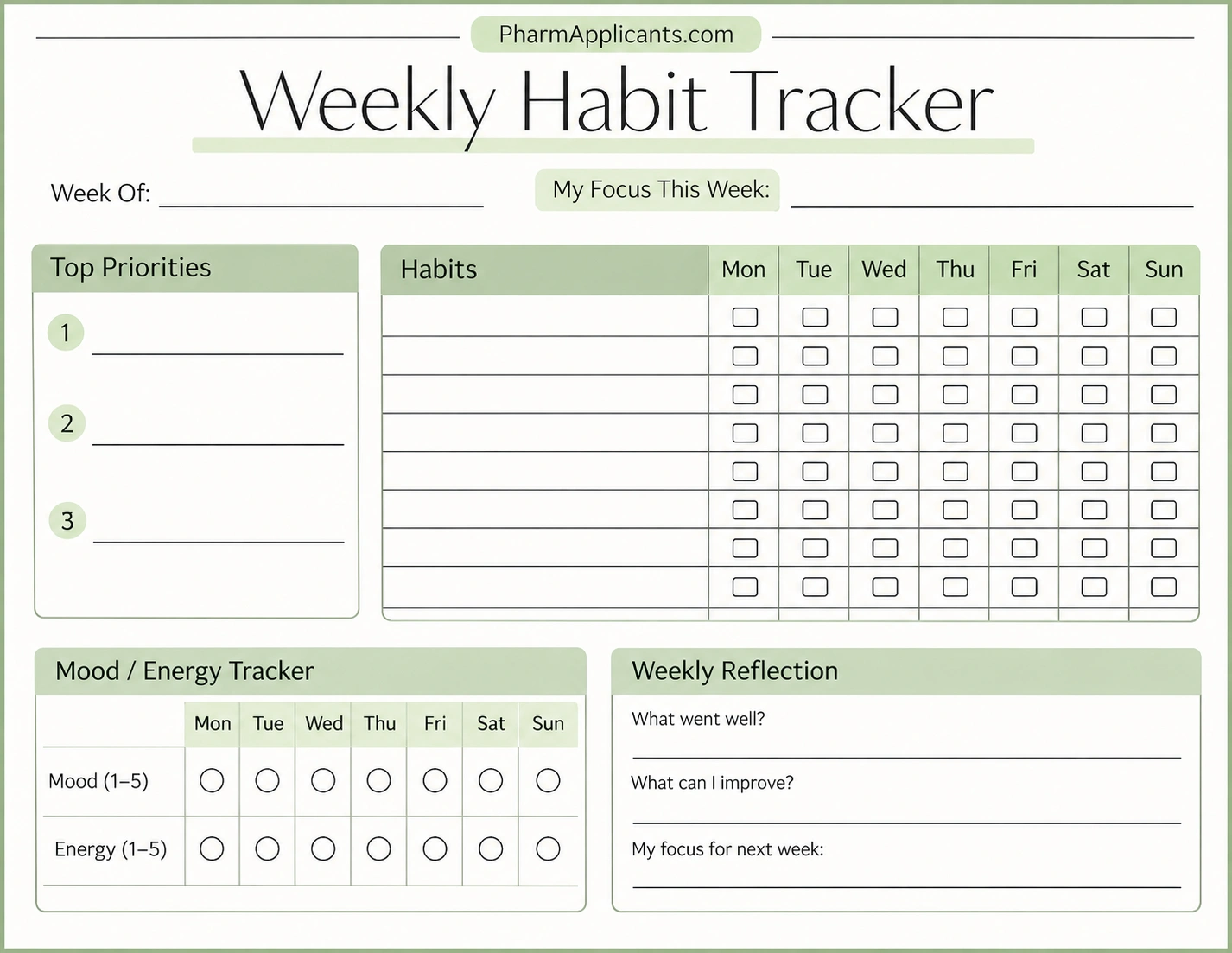
This weekly worksheet is suitable for organizing up to seven days of activities. It includes a habit checklist, weekly priorities, mood and energy tracking, and a reflection section. Use it to monitor your routines and evaluate your progress at the end of each week.
21-Day Habit Progress Log
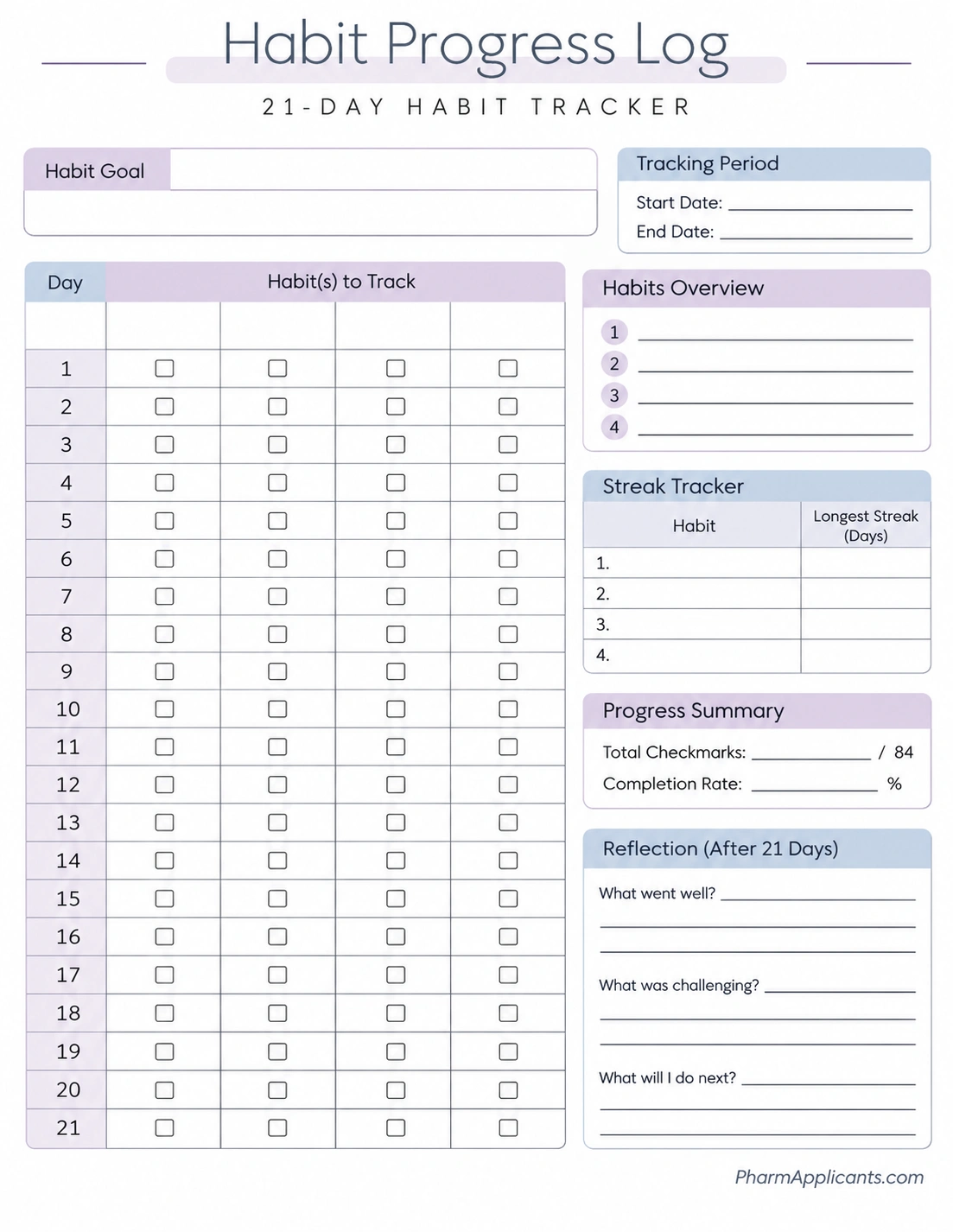
This 21-day worksheet is designed for people who want to monitor several habits over three weeks. Its layout includes a daily progress grid, habit overview, streak tracker, and progress summary. It is especially useful for reviewing consistency and identifying areas for improvement.
Monthly Daily Habit Tracker Template
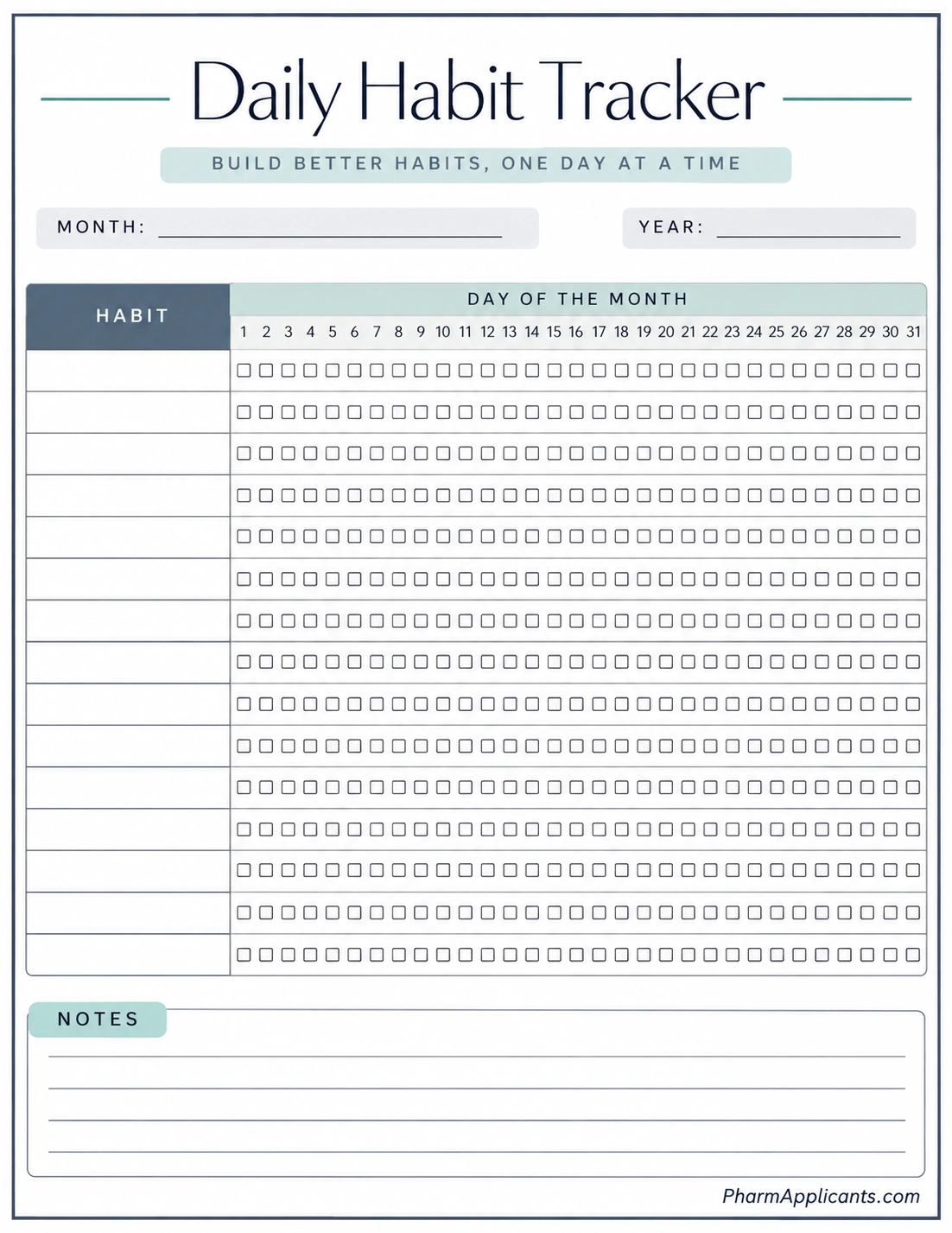
This monthly worksheet provides a simple grid for recording habits across 31 days. It is useful for monitoring multiple activities throughout the month and keeping your routine organized. The additional notes section gives you space to record observations, challenges, or personal reminders.
Frequently Asked Questions About Daily Habit Trackers
What is the purpose of a daily habit tracker?
A daily habit tracker helps you monitor routines, measure consistency, and stay accountable to your personal goals. It provides a visual record of completed activities and makes it easier to identify patterns in your behavior.
How many habits should I track at once?
For beginners, tracking three to five habits is a practical starting point. This keeps your worksheet manageable and helps you focus on developing consistency before adding more activities.
Is a 21-day habit tracker effective?
Yes. A 21-day tracker can be useful for monitoring progress over three weeks. However, it does not guarantee that a habit will become automatic within that period. Habit formation varies between individuals and behaviors.
Should I use a daily or monthly habit tracker?
A daily tracker is useful for recording activities and reviewing your routine each day. A monthly tracker provides a broader overview of your consistency across several weeks. You can use both if they support your goals.
Can I use a printable habit tracker for multiple goals?
Yes. You can include several habits on one worksheet, such as exercise, reading, hydration, sleep, and meditation. However, avoid adding too many activities because a complicated tracker may become difficult to maintain.
What should I do if I miss a day?
Do not abandon your tracker because of one missed day. Leave the box blank and continue with your routine the following day. Consistent effort over time is more valuable than achieving a perfect record.
Are printable habit trackers better than digital trackers?
Neither option is universally better. Printable trackers are useful for people who prefer writing by hand and keeping a physical record. Digital trackers are convenient for people who want reminders and access from multiple devices. Choose the format that you are most likely to use consistently.
Conclusion
Building better routines starts with small actions repeated consistently. A daily habit tracker gives you a simple way to organize your goals, record completed activities, and understand your progress over time.
Whether you choose a weekly, 21-day, or monthly habit tracker, focus on realistic goals and manageable routines. Use the printable worksheets to monitor your activities, reflect on your results, and make gradual improvements.
Remember that progress does not need to be perfect. Start with a few meaningful habits, stay consistent, and give yourself time to develop routines that support the life you want to build.
